The short version
Use any of these as written.
Short. Concordia is a walkable simulation of a 21 km rotating space city at Earth-Moon L5. Four cities spin at Earth gravity, and the whole station opens in a browser.
Medium. Concordia is an interactive simulation of a rotating space city built at the Earth-Moon L5 region. Its four habitation rotors each turn once every 100 seconds to give 1 g, and visitors can walk its streets, ride the lift to weightlessness and follow a family from a kitchen to a launch track, free in a browser. The physics is real. The 2045 history is a speculative design.
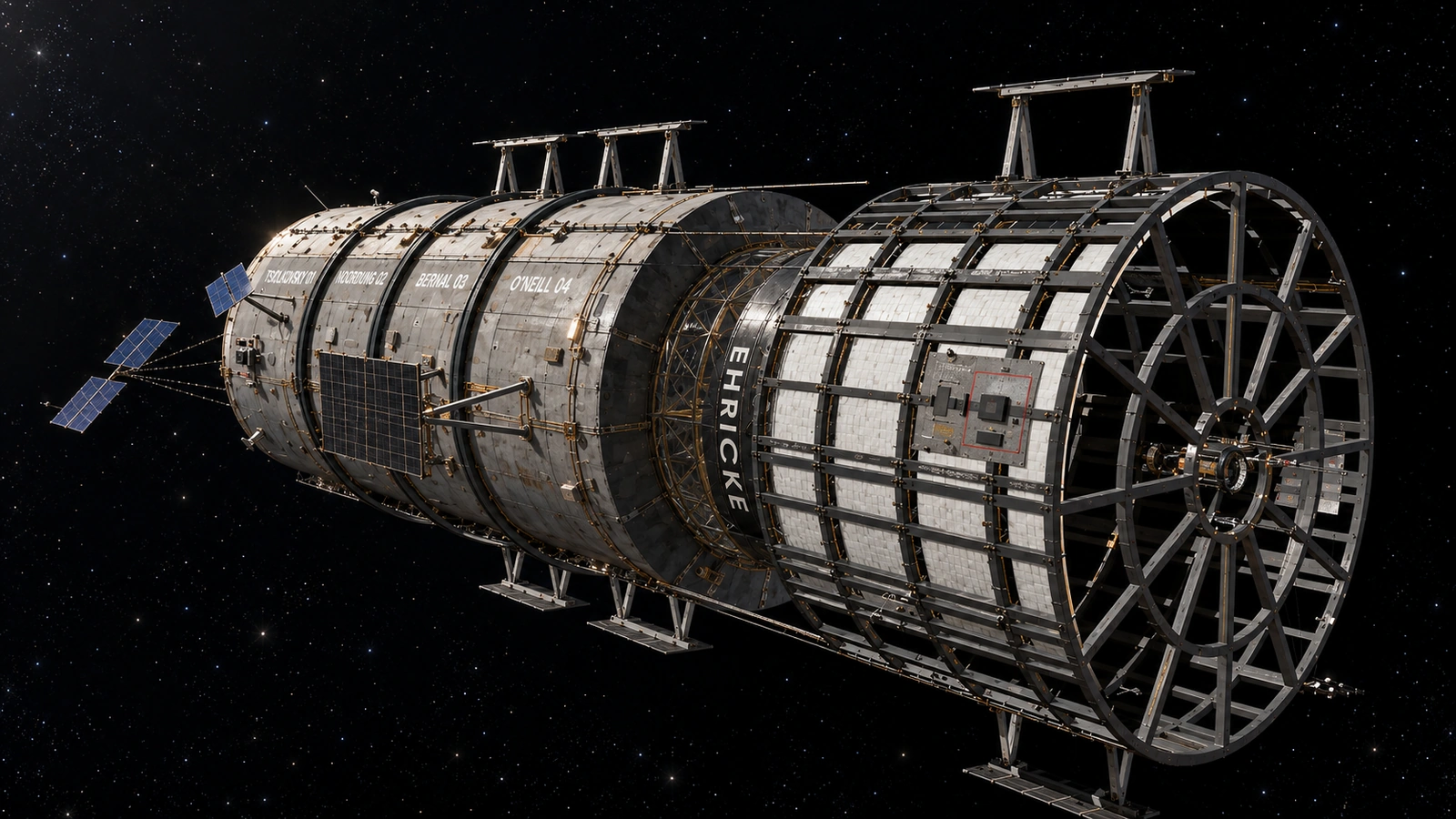
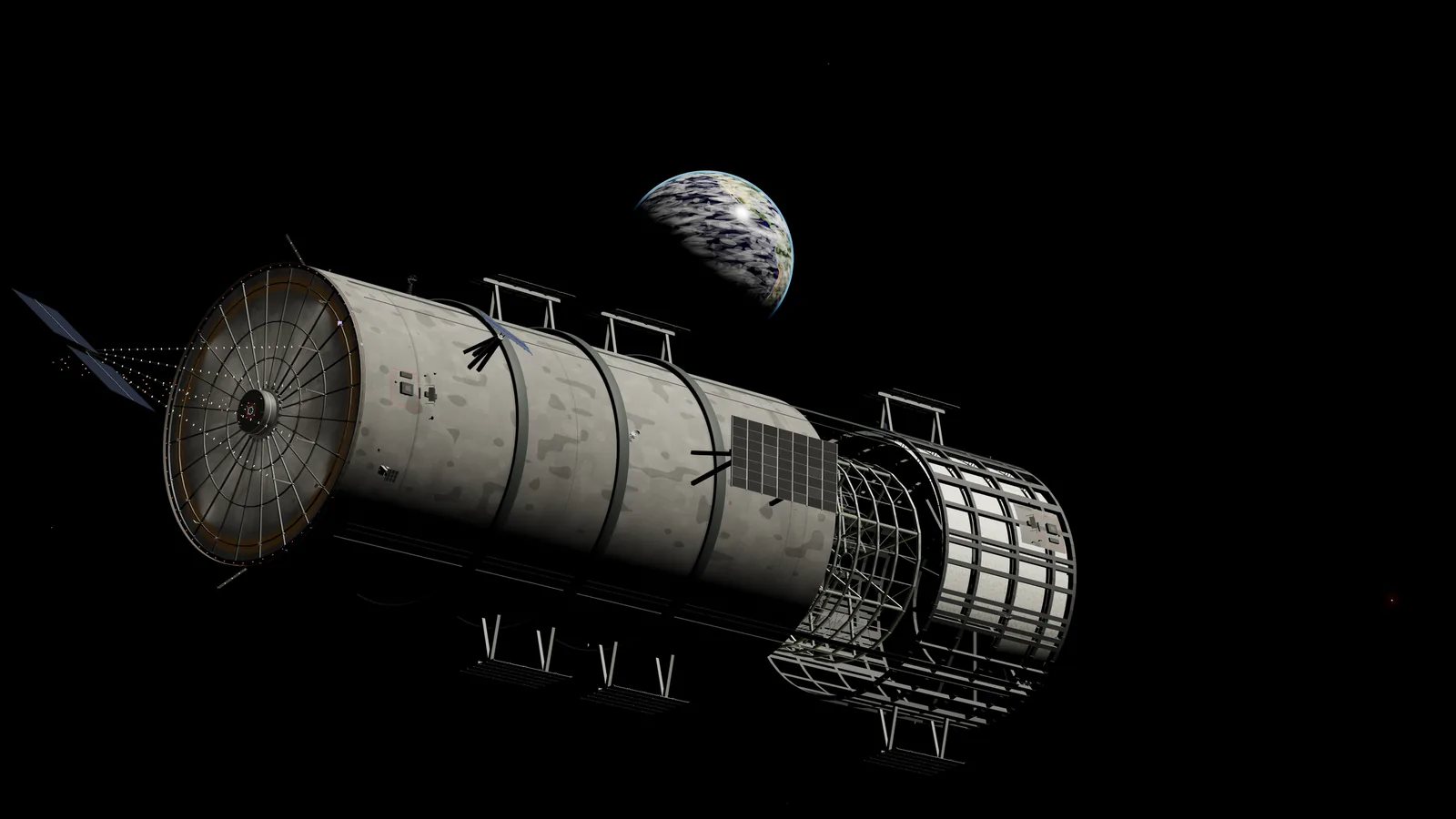
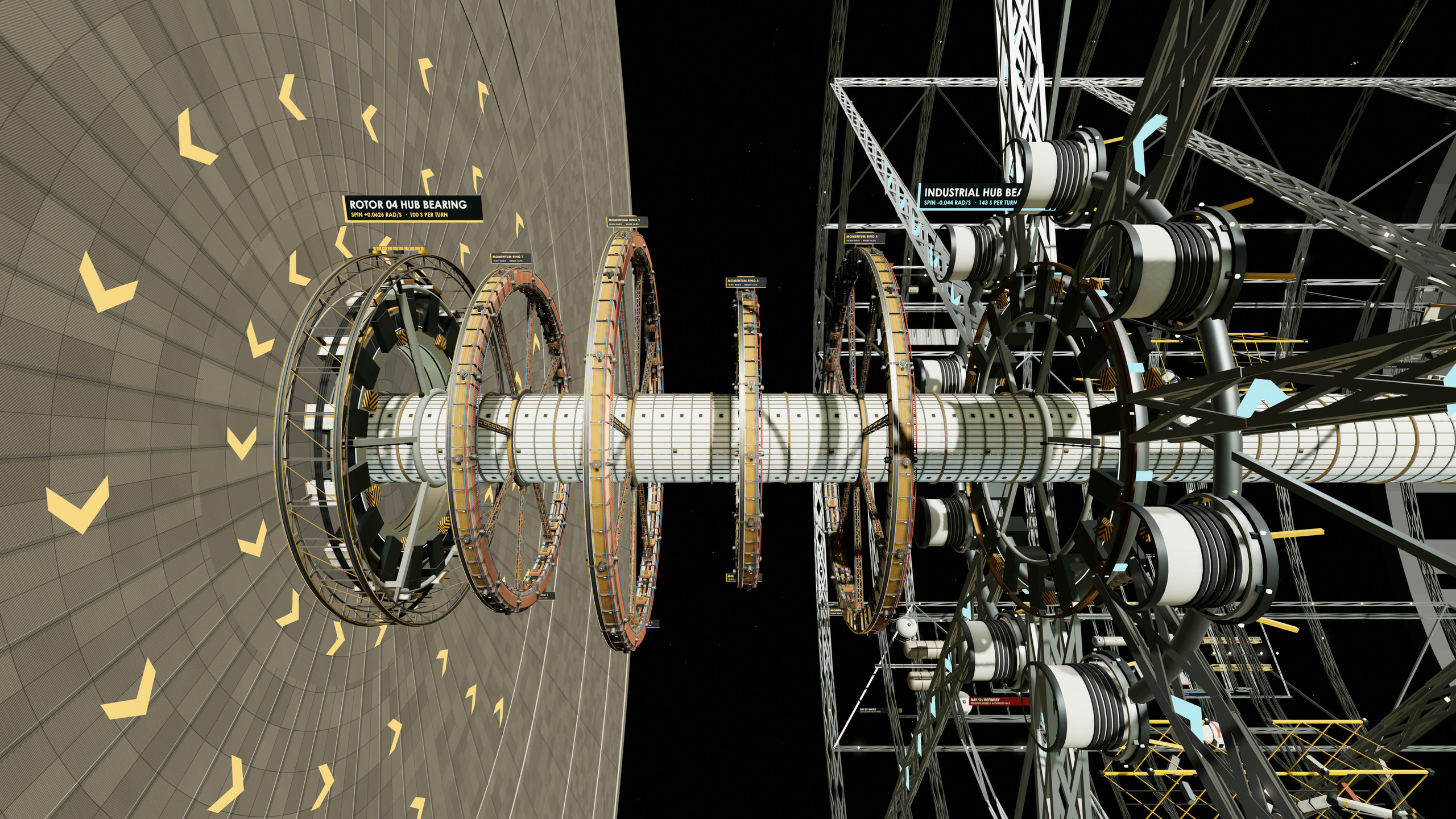
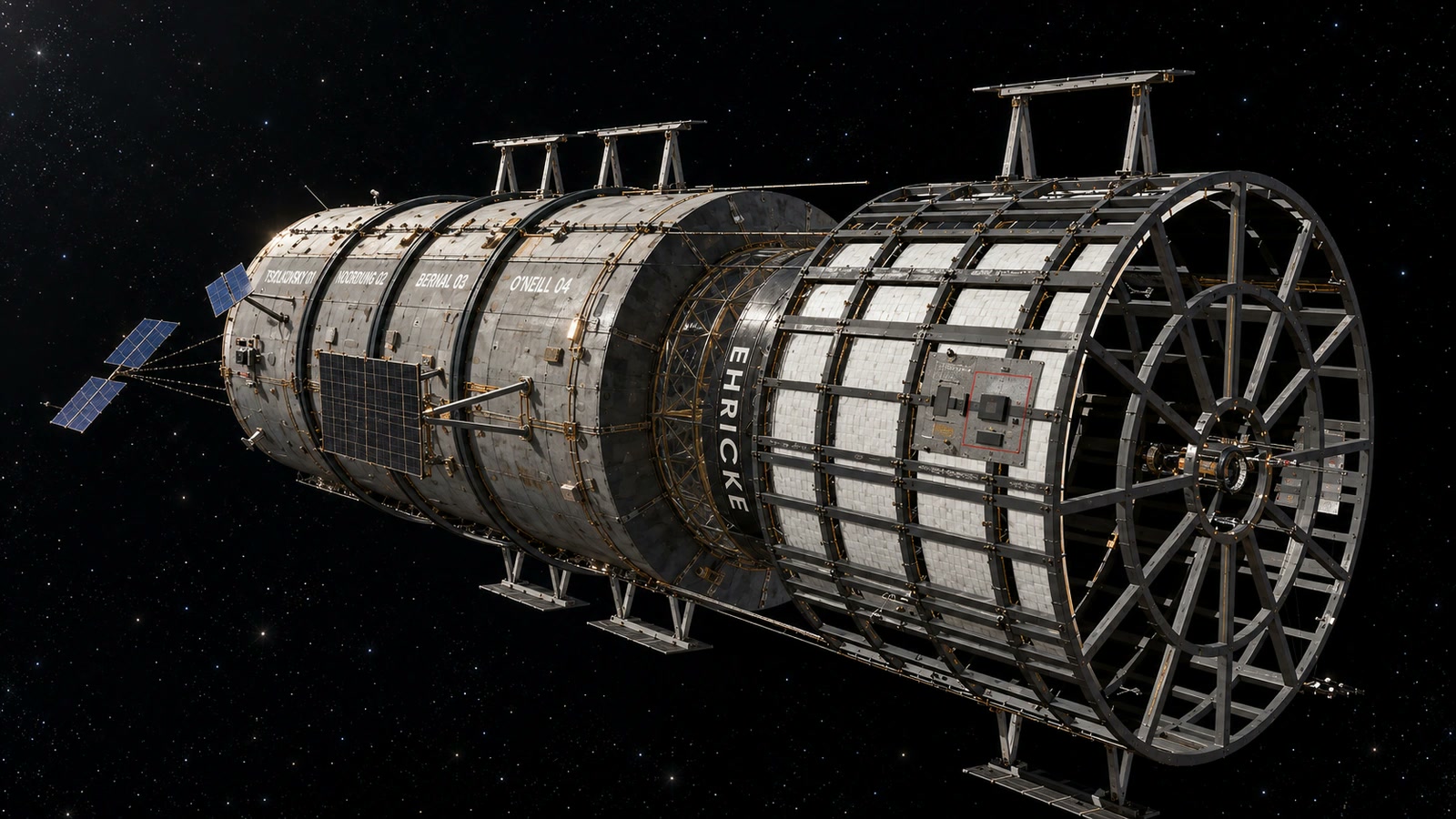
Long. Concordia is an interactive simulation of a rotating space city, 21 km long, at the Earth-Moon L5 region. Four habitation rotors, each 2.5 km in radius, turn once every 100 seconds to give the ground Earth's gravity. Tsiolkovsky (Rotor 1) and Noordung (Rotor 2) spin opposite to Bernal (Rotor 3) and O'Neill (Rotor 4), so the station nets close to zero angular momentum and does not wobble. Visitors walk the streets, ride a lift from 1 g to weightlessness, tour the shipyard and spaceport, and follow a family from a kitchen to a 10 km electromagnetic launch track. The whole station is modelled at full scale and runs in a desktop browser at concordia.davidveksler.com, with a guide of plain-language science pages that works on any phone. It was made by David Veksler. The design descends from Gerard K. O'Neill's 1970s space settlements.
Facts
- Name. Concordia. Maker: David Veksler. Site: concordia.davidveksler.com. Free, no sign-up, nothing sold.
- Needs. The 3D simulation wants a desktop browser with a real GPU. The guide, the atlas of scenes and the film work on any device.
- Licences. The sound, textures and other bundled assets carry their own licences, listed on the credits page.
- Numbers. Every figure comes from the project's fact sheet, with the basis marked as physics, design value, engineering challenge or story. The station by the numbers page has them all.
What is real and what is invented
Real: spin gravity, counter-rotation and angular momentum, radiation and debris shielding, air loss through a breach, orbital mechanics at L5, and the engineering limits on each. Invented: the 2045 history, the economy that pays for it, the families and the names. The about page says the same in more words, and every number on the site is labelled with which kind it is.
The design started from Isaac Arthur's episode "The O'Neill Cylinder Space Habitat: Islands In The Sky" (2025-04-24), credited on the site. Concordia differs from the 1970s designs in using four sealed rotor cities instead of one and a shield that stands still.
How it was made
David Veksler designed it and directs the work. AI coding agents write much of the code under a written engineering specification, with automated checks and review on real GPUs before anything ships. The building page covers how the station itself is built, and David will talk through how the simulation was made on the record.
Film
A 1 minute 44 second film of the guided tour, in 4K: watch on YouTube. There is no voice-over.
Images
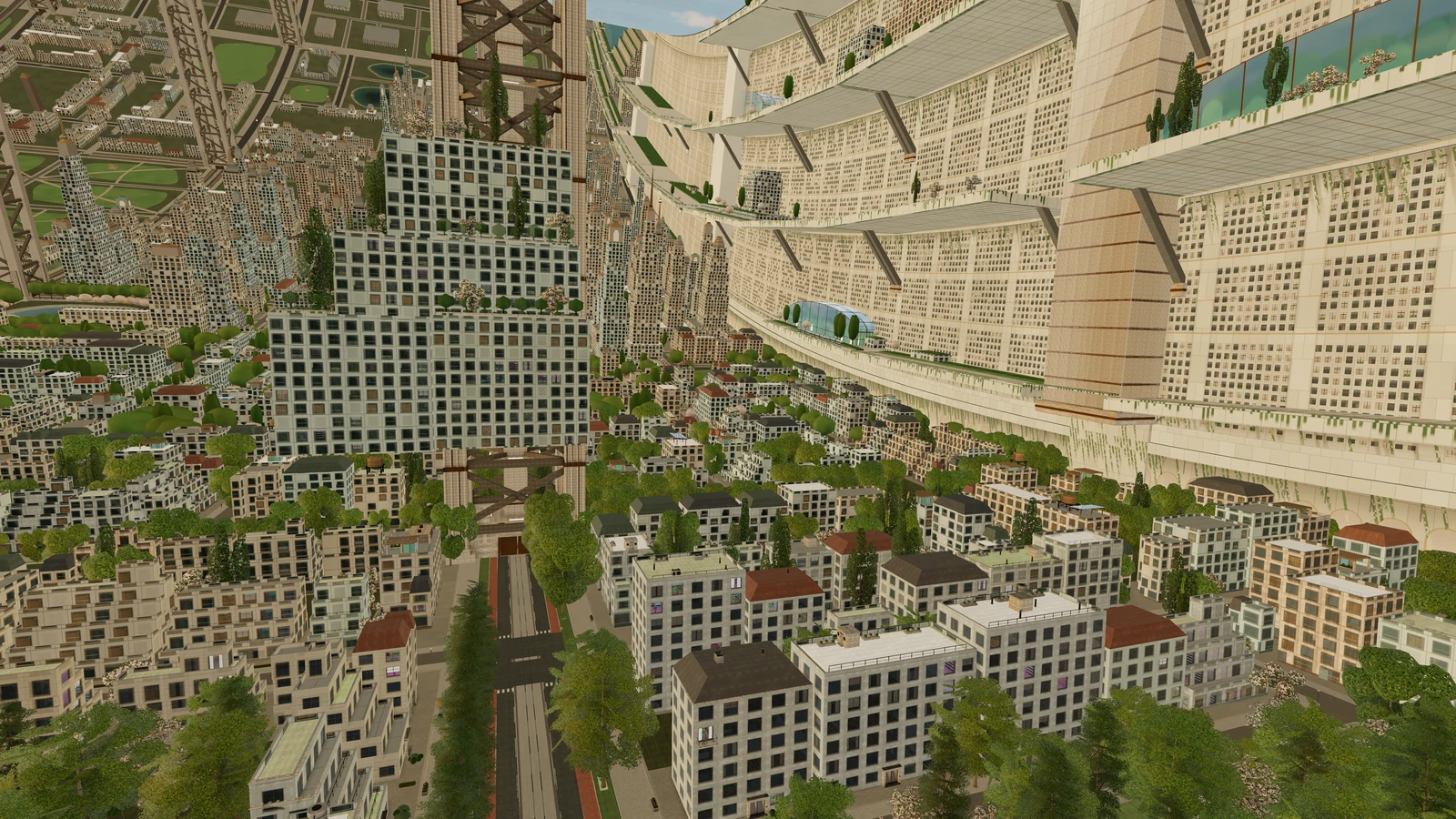
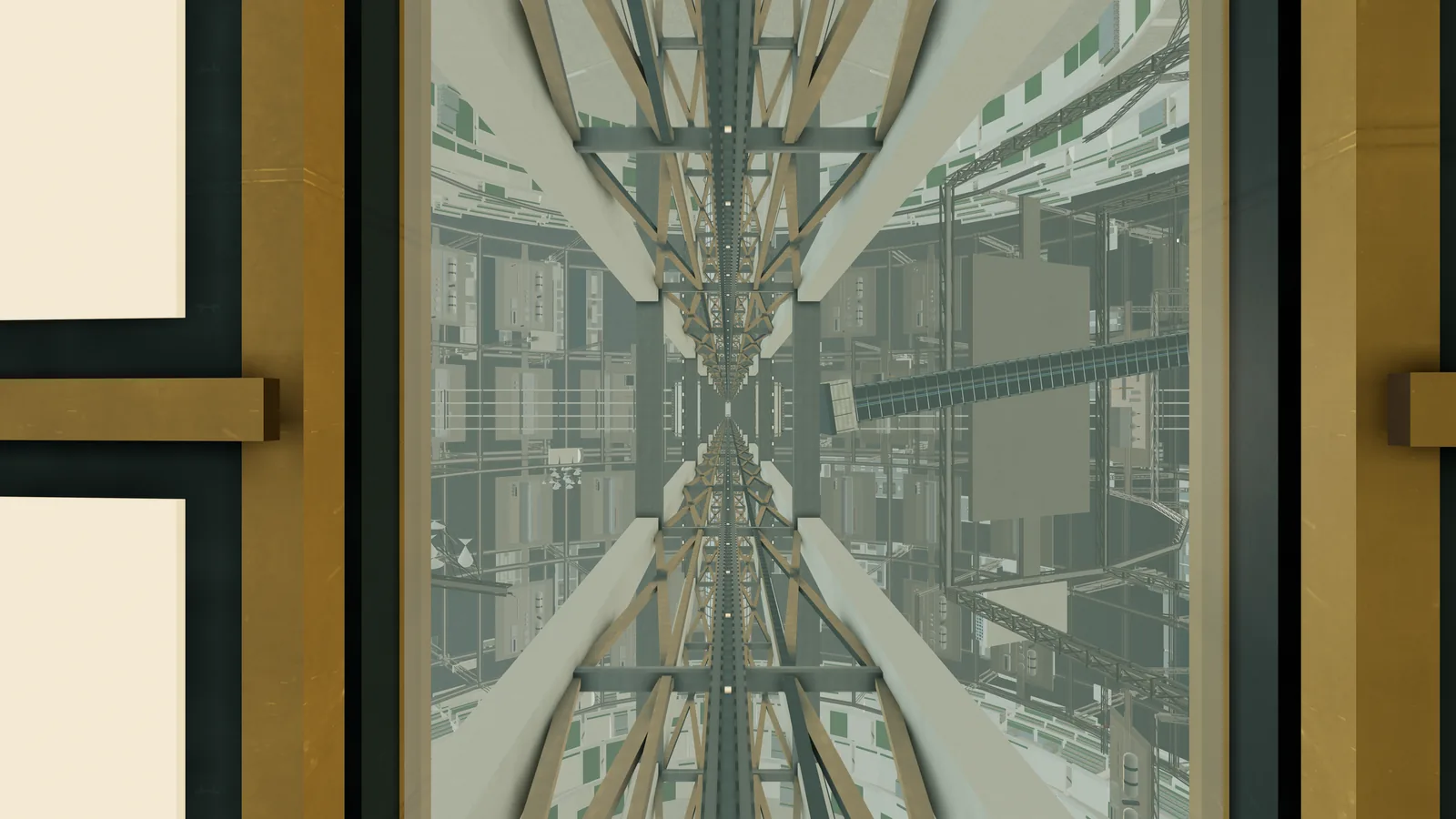
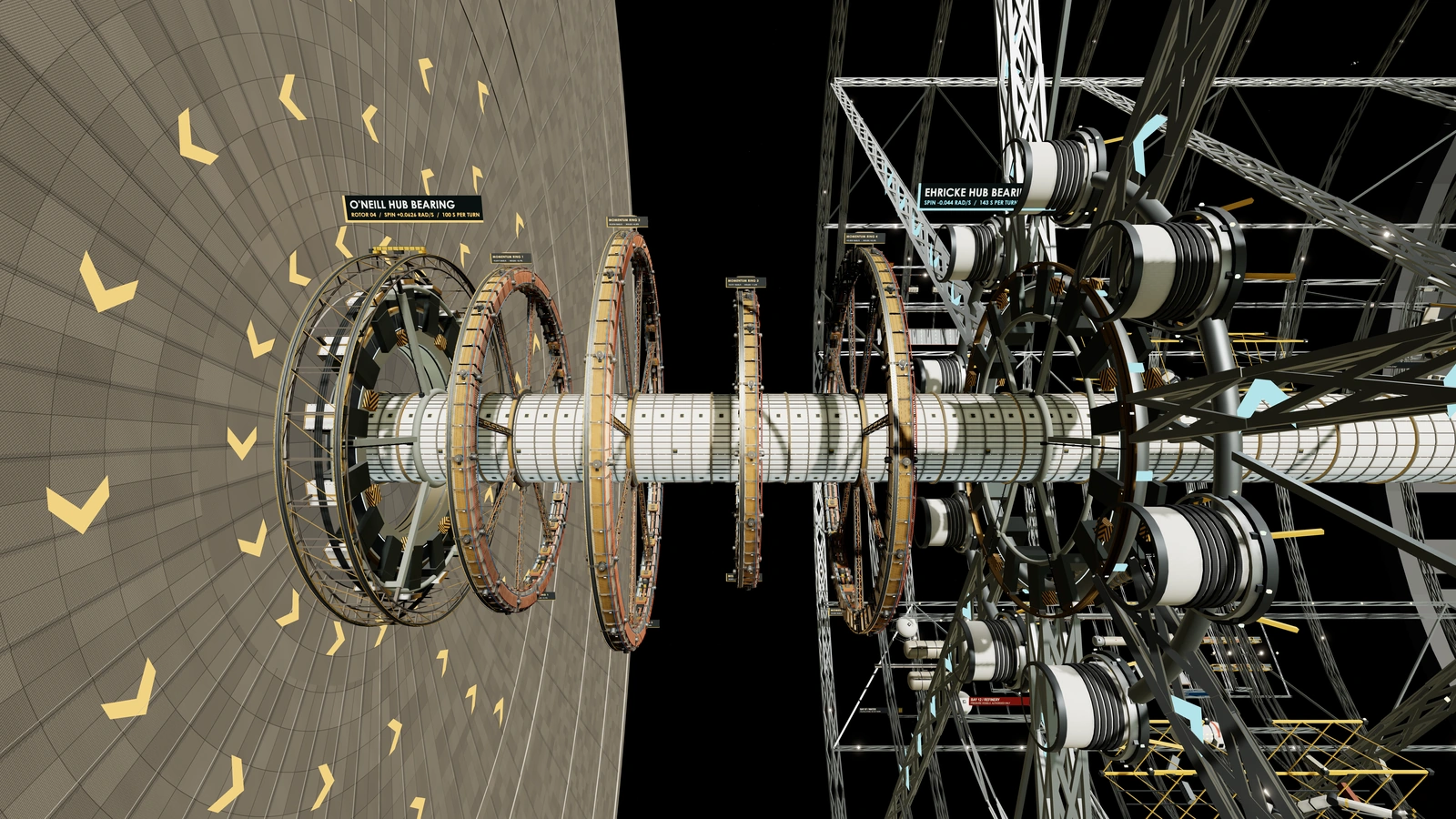
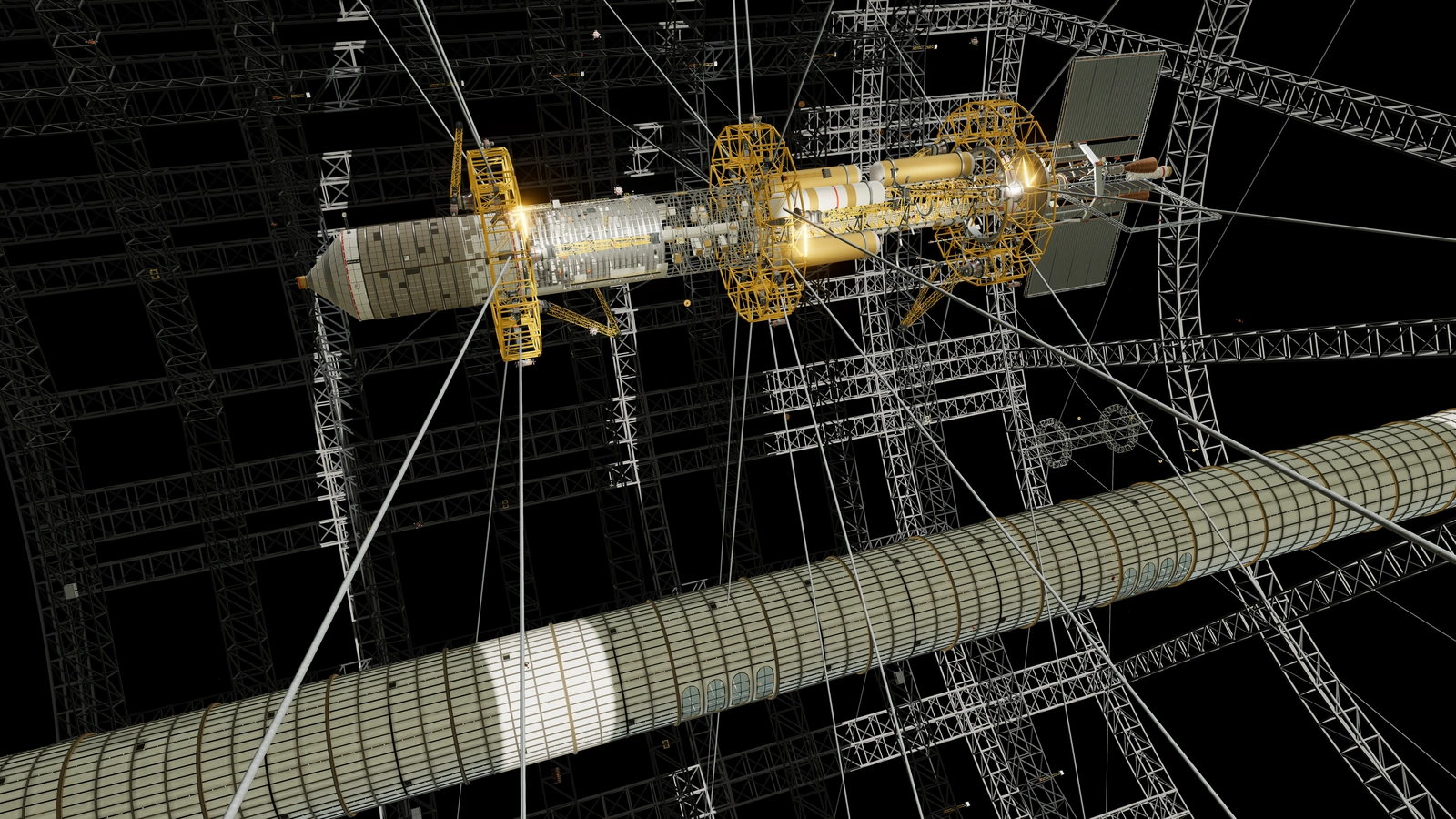
Six images from the simulation, free to use with the credit line below. Click an image to see it larger; the files in the table below are the full-resolution downloads.
| File | Shows | Size |
|---|---|---|
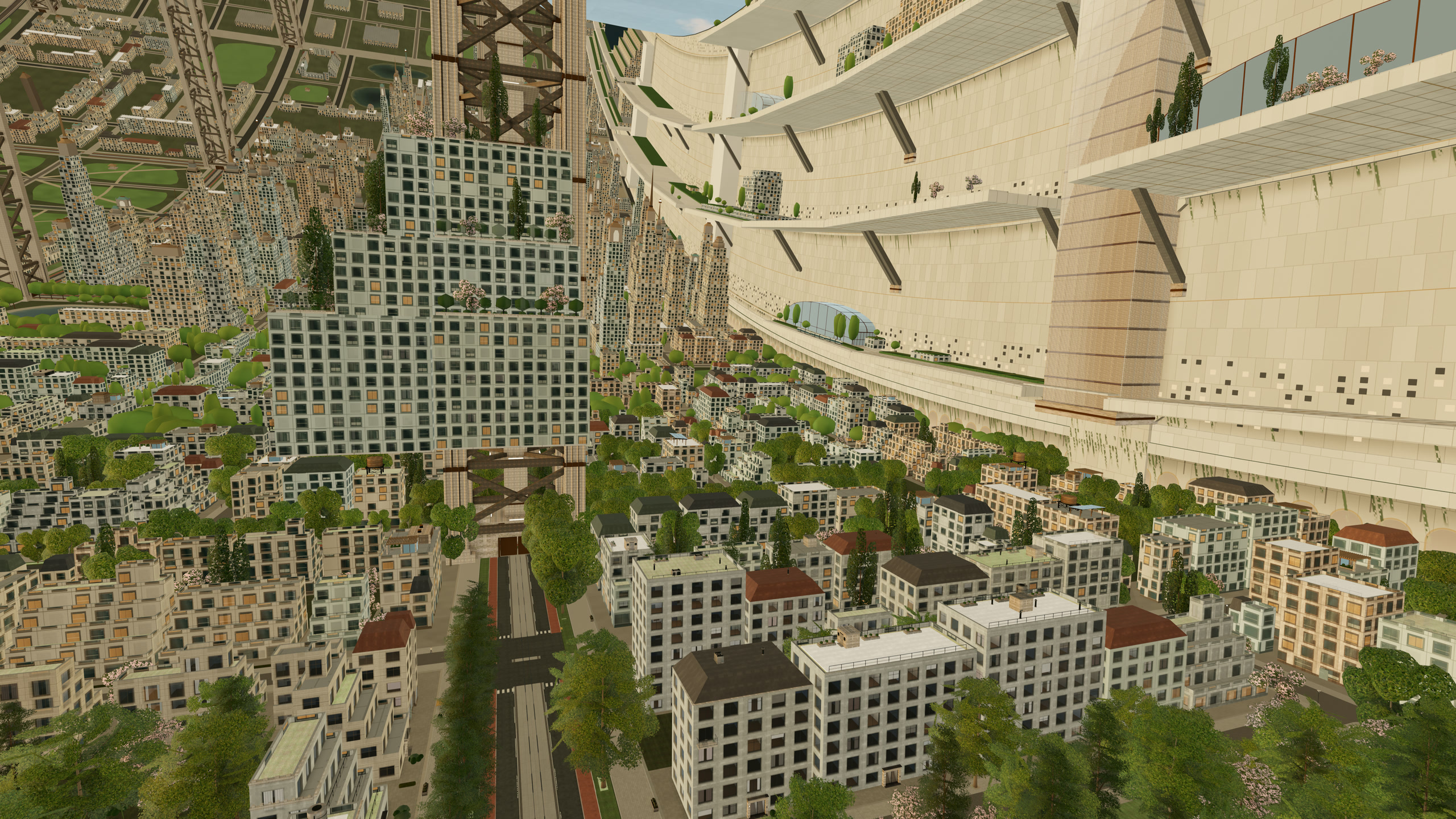
| concordia-city-megaframe-2560.jpg | The city under the megaframe | 2560 x 1440, 1.5 MB |
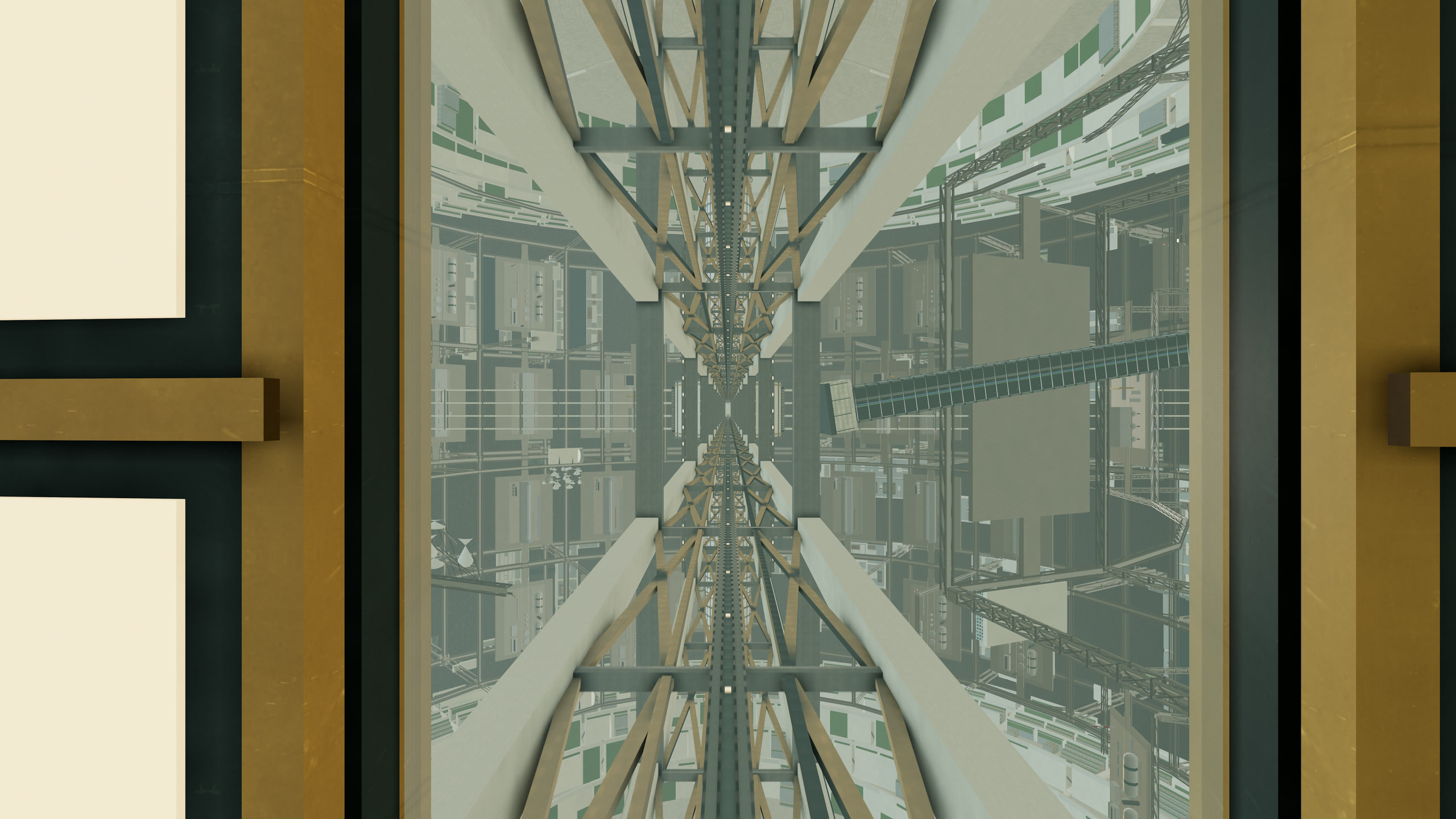
| concordia-ascender-sky-2560.jpg | The lift to the axis | 2560 x 1440, 0.5 MB |
| concordia-counter-rotation-2560.jpg | The counter-rotating hub | 2560 x 1440, 1.1 MB |
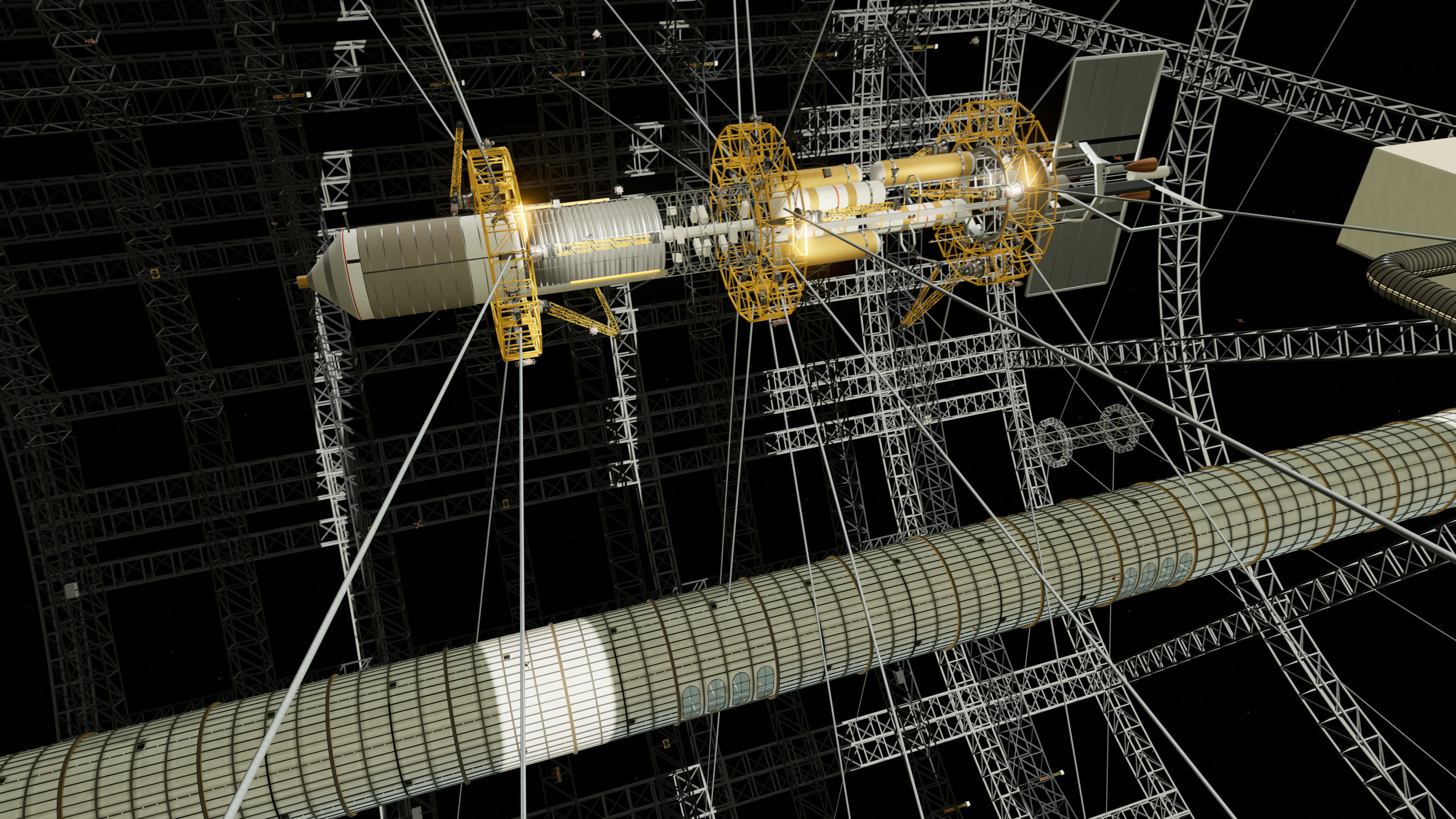
| concordia-shipyard-2560.jpg | The shipyard | 2560 x 1440, 1.0 MB |
| concordia-station-pullback-1600.jpg | The whole station (render enhanced with an image model) | 1600 x 900, 0.3 MB |
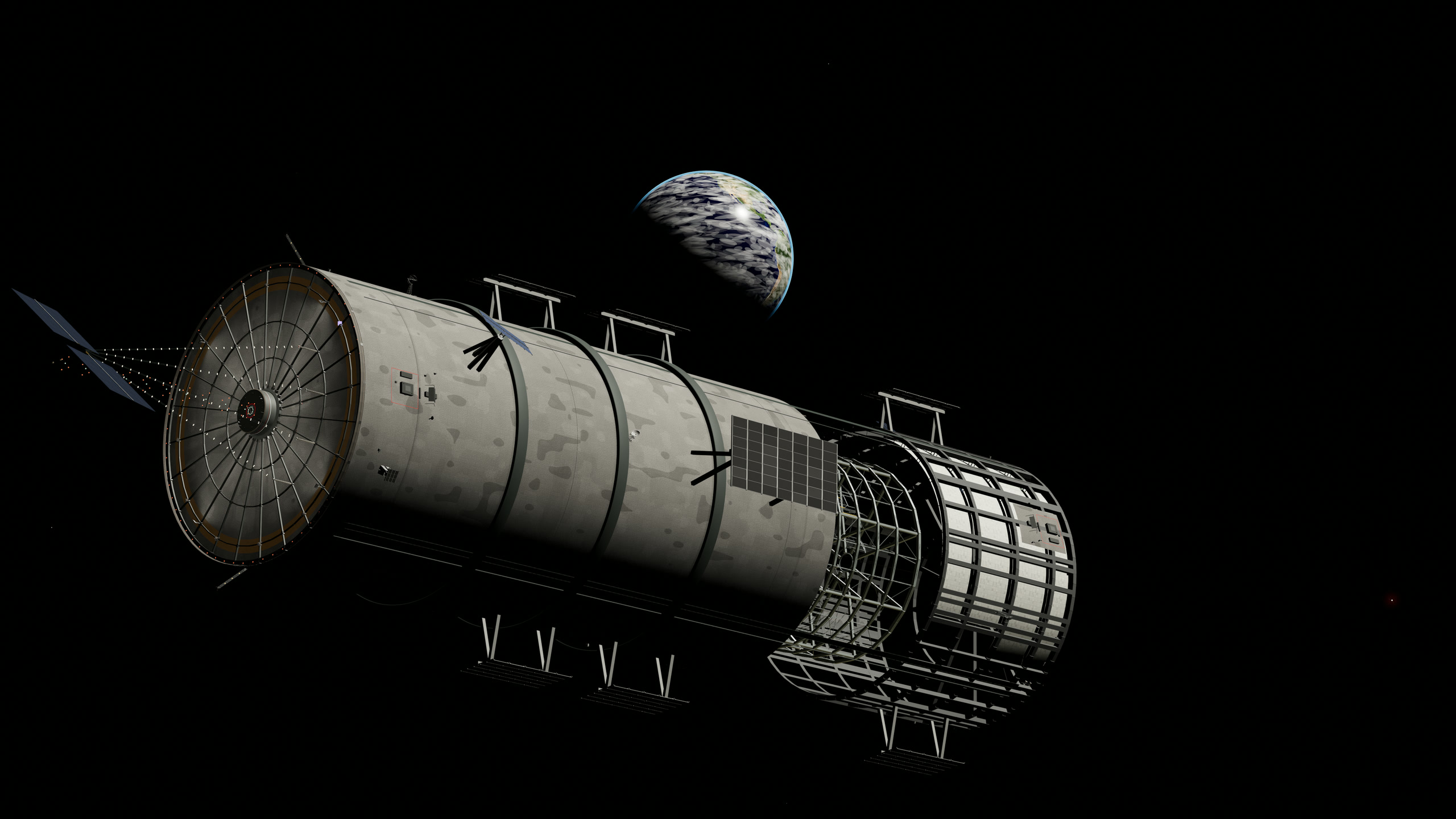
| concordia-end-lookback-2560.jpg | The caged end and end disc | 2560 x 1440, 0.3 MB |
Footage
Silent 4K clips of any scene in the film are free to use in videos and articles, monetized channels included. Ask at the address below and say which scenes; clips come as H.264 or ProRes. The film's soundtrack is not part of the offer, because its sound effects are licensed for non-commercial use only.
Credit line
Concordia by David Veksler, concordia.davidveksler.com. Earth textures: Solar System Scope, CC BY 4.0.
A link to the site is welcome. The full list of sources and licences is on the credits page.
Contact
David Veksler: contact@davidveksler.com. Interviews, a walkthrough of the station, a screen-share demo, a question about a number or a clip that is not here: write.
If you find something that is wrong, write that too. Every number on the site is labelled with its basis.