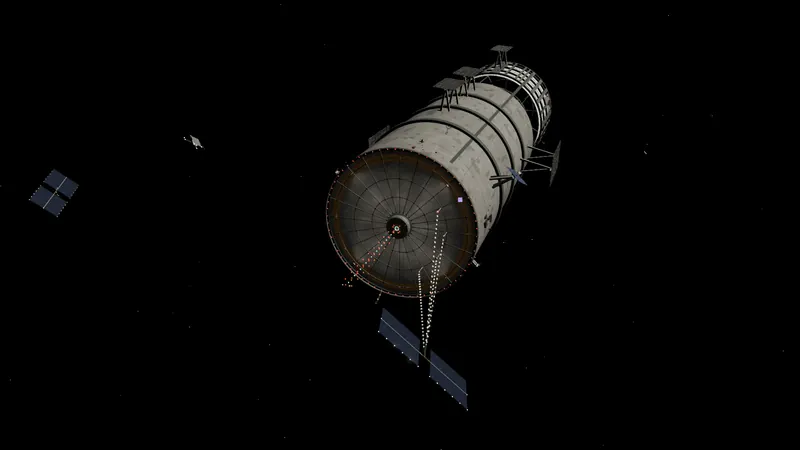
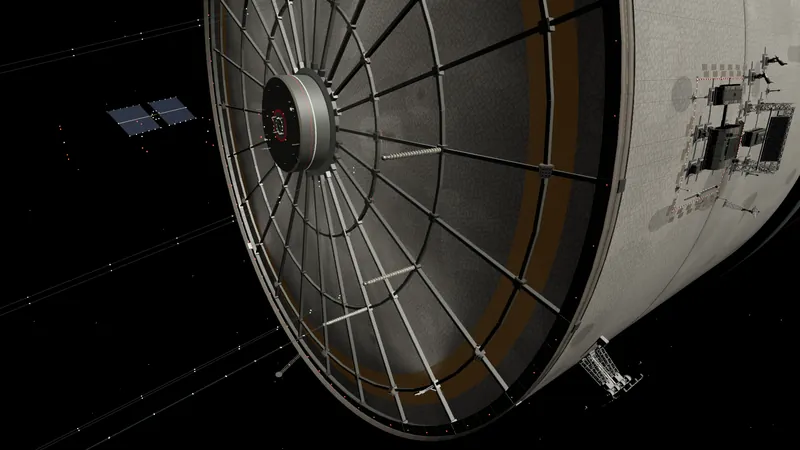
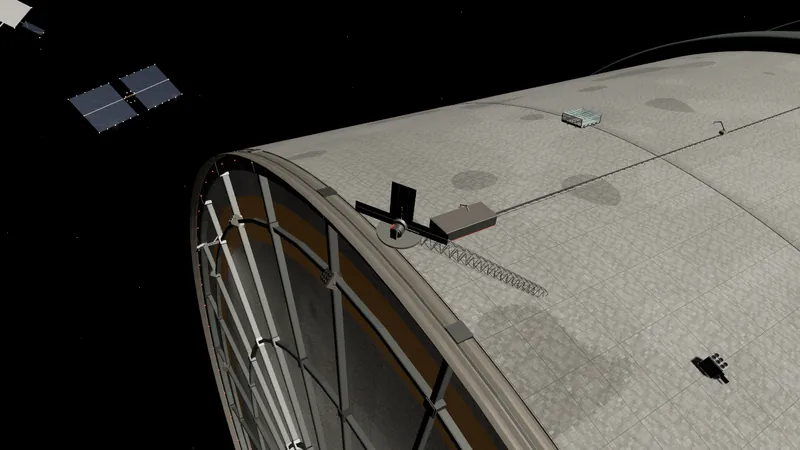
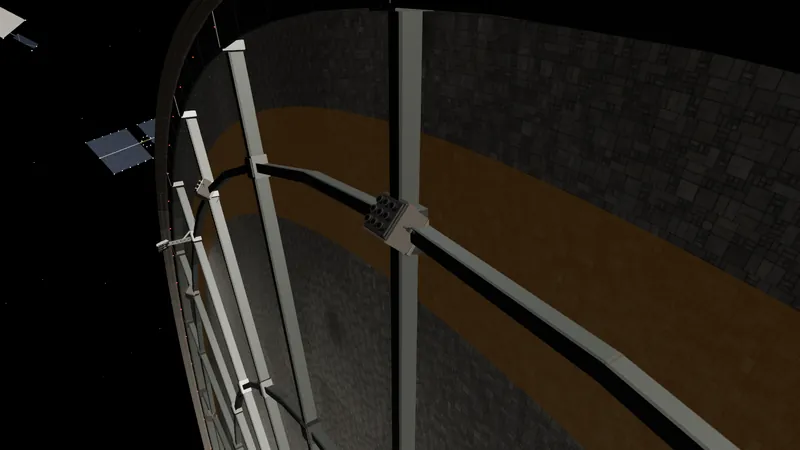
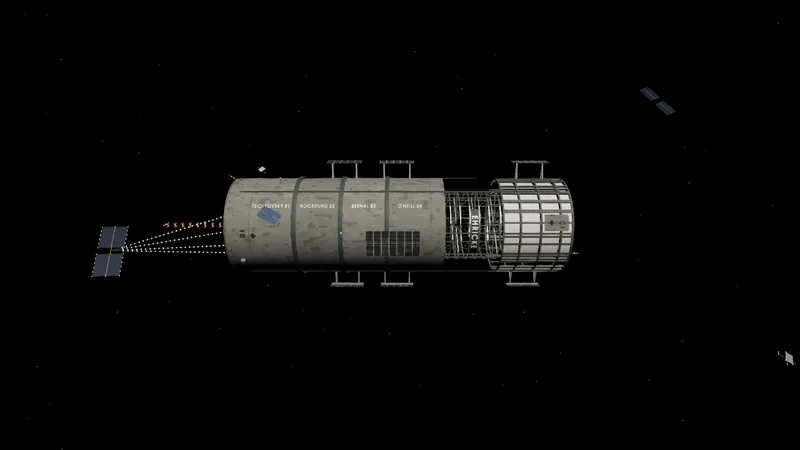
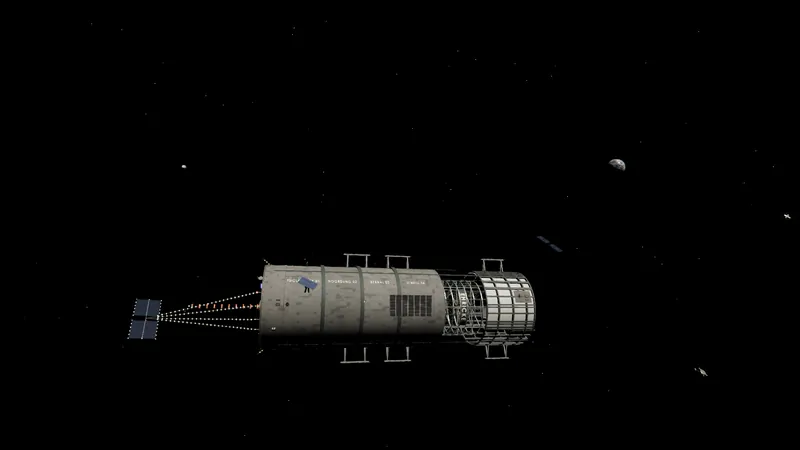
This is a guide to eighty-four views of Concordia, grouped by where they are: streets and parks, the climb to the axis, the machine rooms, the spaceport and the outside of the hull. Each one opens the simulation at that exact spot.
Pick a card and press Open this view. The simulation loads at that camera position in Explore mode. From there you can walk, fly or press M to choose another view.
Every card links to /explore/?viewpoint=<id>. You can paste the same link anywhere, or add &overlay=gravity to open the view with an engineering overlay on top. The guide lists all the link options. To follow the story rather than browse, start with Open in the simulation: the family's breakfast or read the journey.
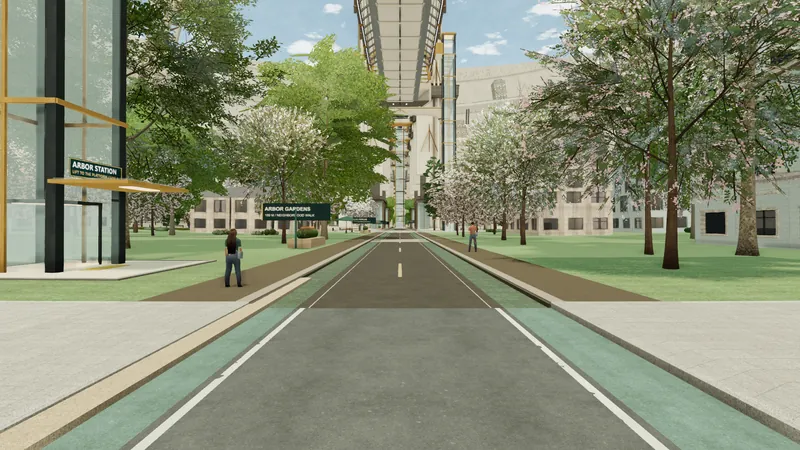
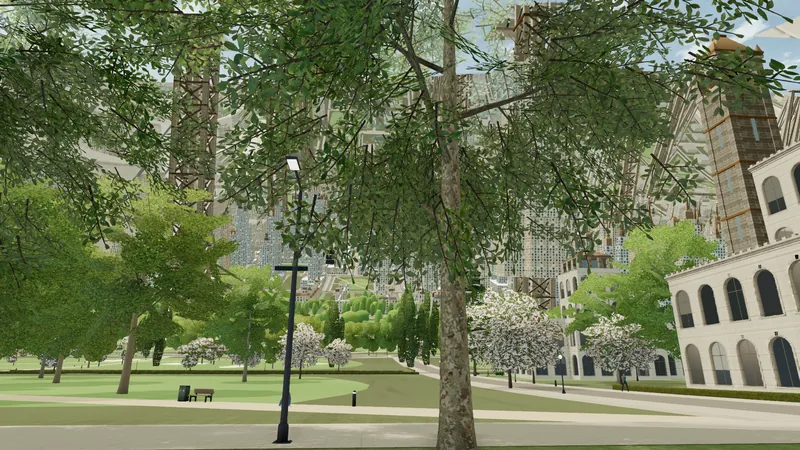
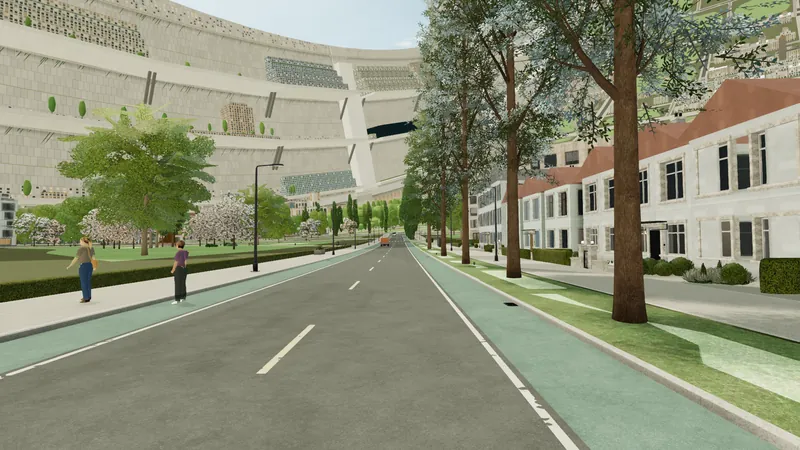
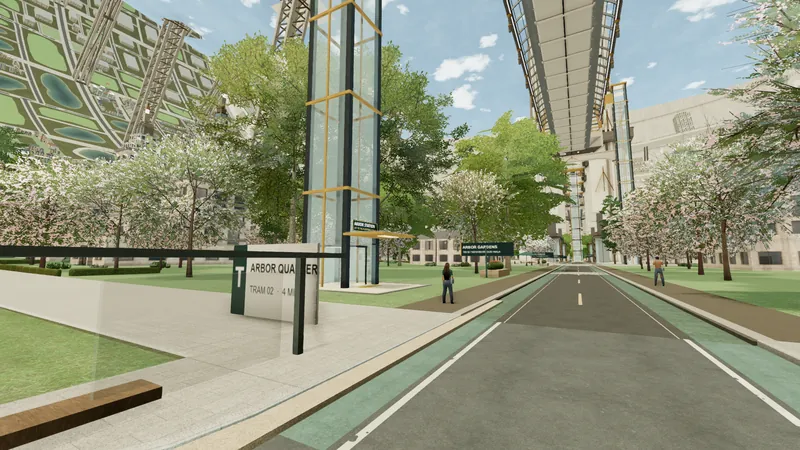
An ordinary street in Tsiolkovsky (Rotor 1) at eye height. The ground is the rotor wall, so it feels like any street on Earth, and the lawns and buildings run on until they curve out of sight.
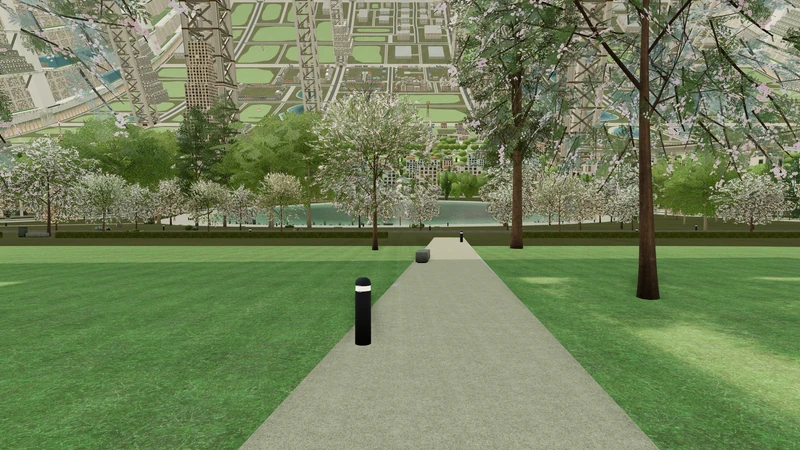
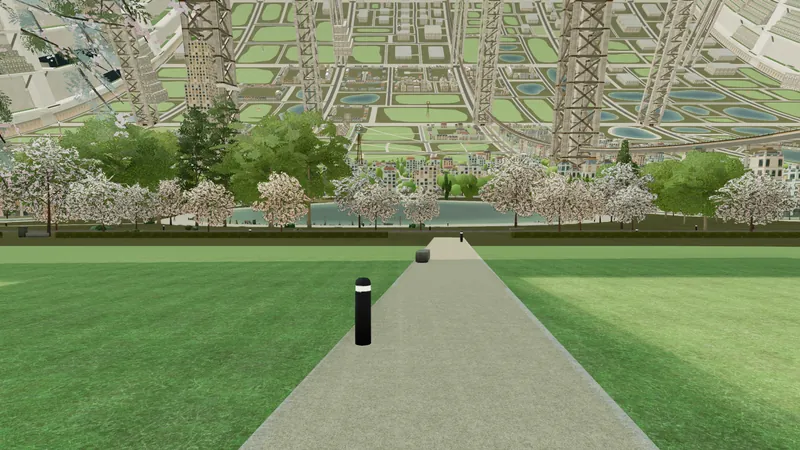
A lakeside park a short walk from the family apartment, framed by low-rise housing. The path leads to the water, and the far shore bends upward with the rest of the city.
Crowned towers, spires and one signature landmark seen from a park lawn 1.1 km away. Every skyline here is a cluster of landmarks set against the curve of the world.
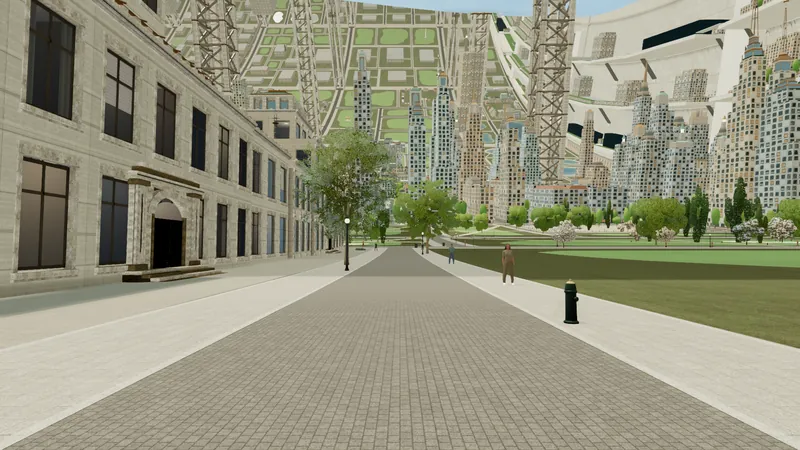
A paved street in Noordung (Rotor 2) with a stately civic frontage on one side and a green square ahead. Beyond the square a tower district climbs the curve of the rotor. The generator that drew Tsiolkovsky drew a different city here, from its own seed.
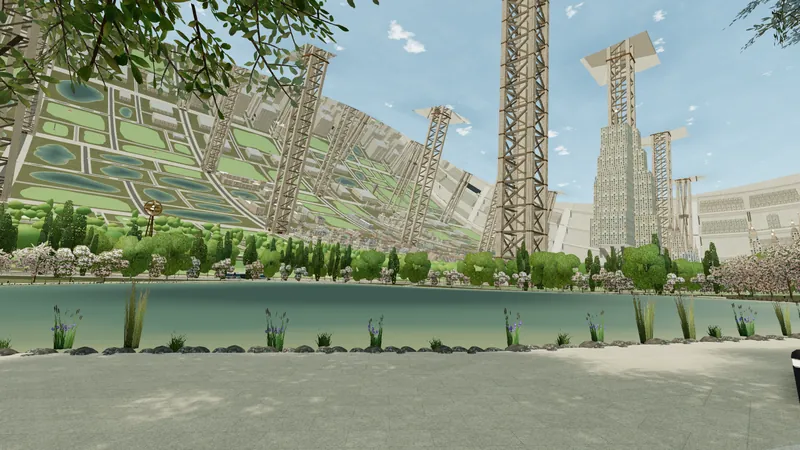
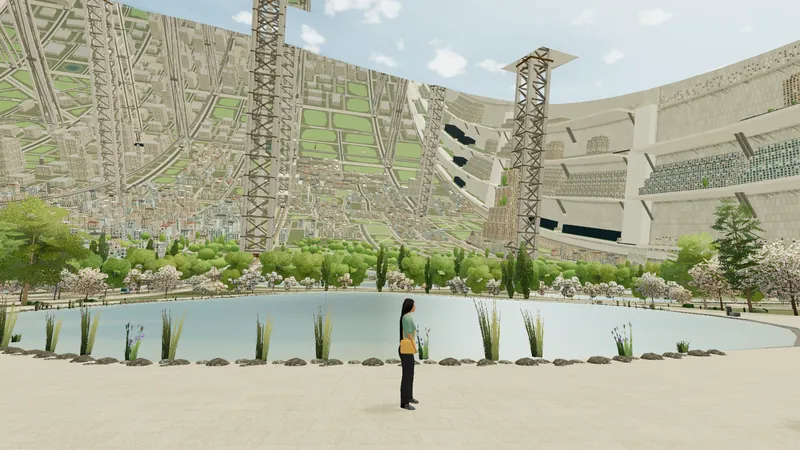
A promenade on the shore of one of Noordung's lakes. The reeds are planted, the path is paved and the ground climbs away along the ring to a bright sky. Noordung runs a 14 hour day, the longest on the station.
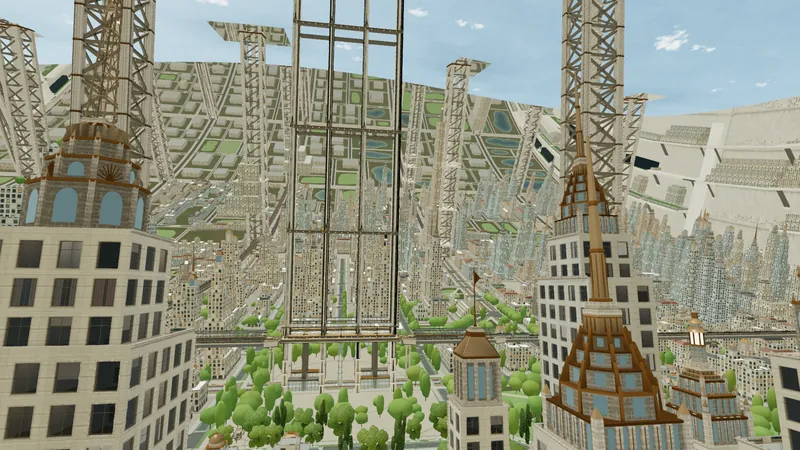
Copper-crowned towers and spires in Noordung from 120 m up, where the weight is about 0.95 g. Megaframe ribs rise between them and the ground climbs away along the ring in every direction.
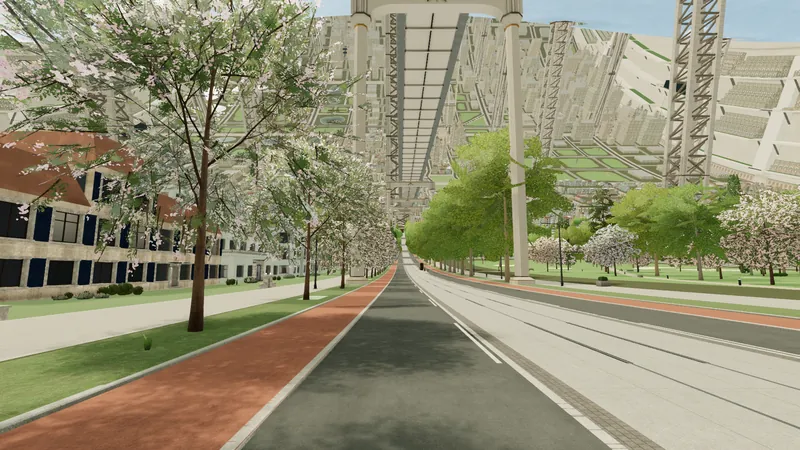
A mid-rise street in Bernal (Rotor 3) at eye height: a bike lane, red-roofed terraces and a boulevard that runs on into the curve of the city. Bernal's day lasts 10 hours, the shortest on the station.
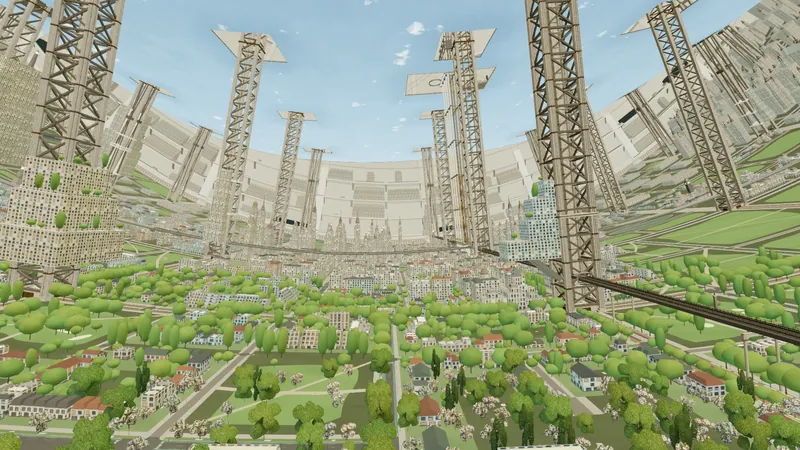
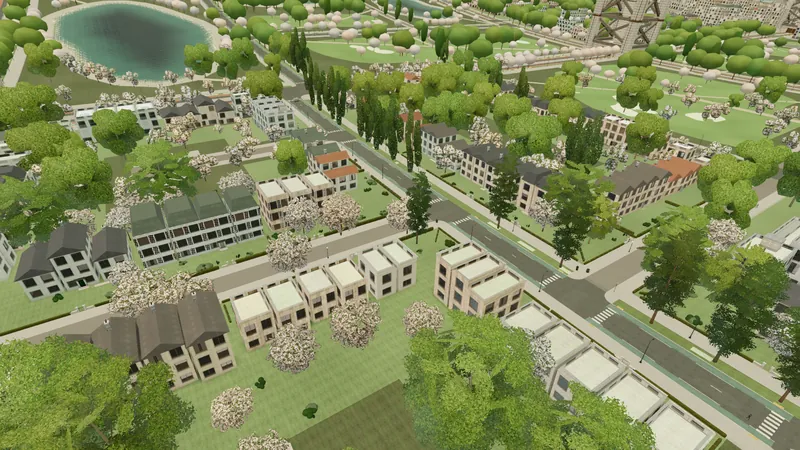
Bernal from 120 m up, looking along the rotor. Parkland, lakes and mid-rise blocks lie below, and the megaframe towers carry the eye up to the sky membrane and across the curve of the world.
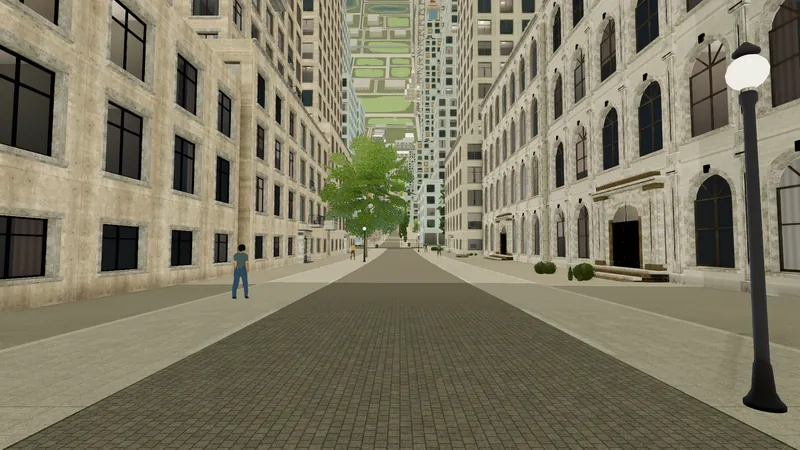
A street through the urban core of O'Neill (Rotor 4). Tall arched frontages stand close on both sides and the street runs into the dense center of the district.
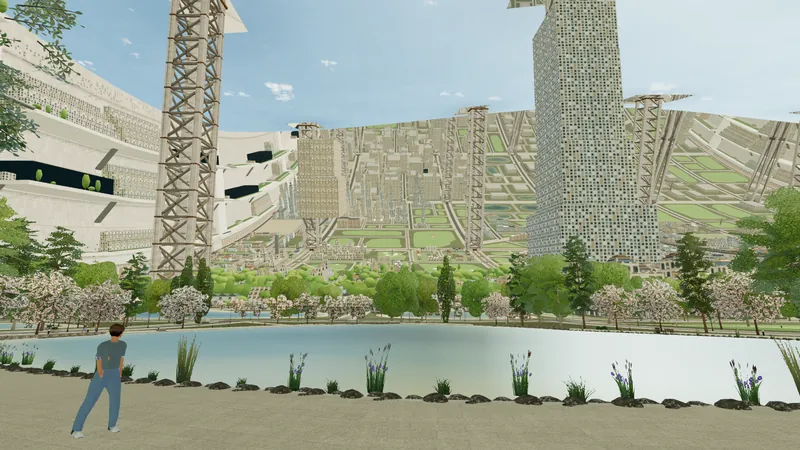
A paved plaza on the shore of a lake in O'Neill. A resident stands at the water's edge, reeds line the shore and the city rises across the lake and the ground climbs away along the ring.
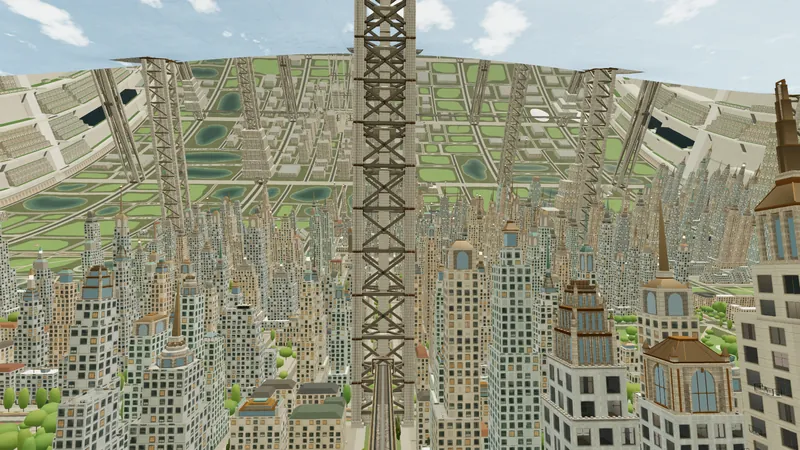
O'Neill's urban core from 120 m up: a field of crowned towers and spires with megaframe ribs climbing between them. O'Neill is the forward rotor, and it reached full spin in 2044.
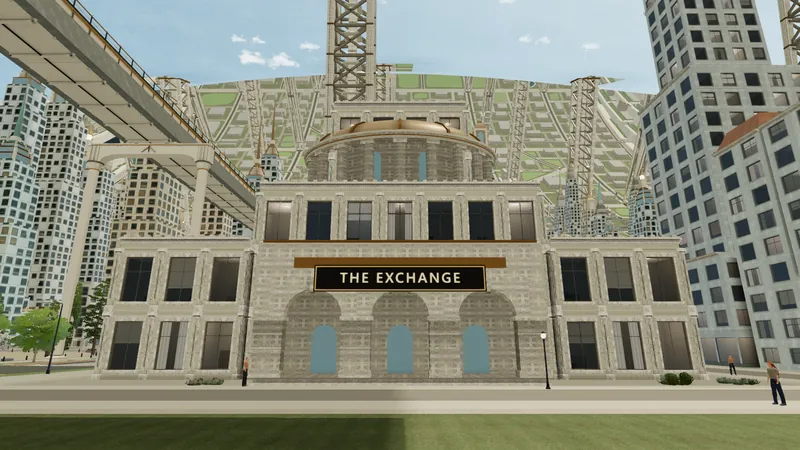
The market hall of the capital quarter in Noordung (Rotor 2), a dome behind a portico on its own plaza. Energy and compute for the whole station are priced here, a few streets from the Charter Hall and the Court.
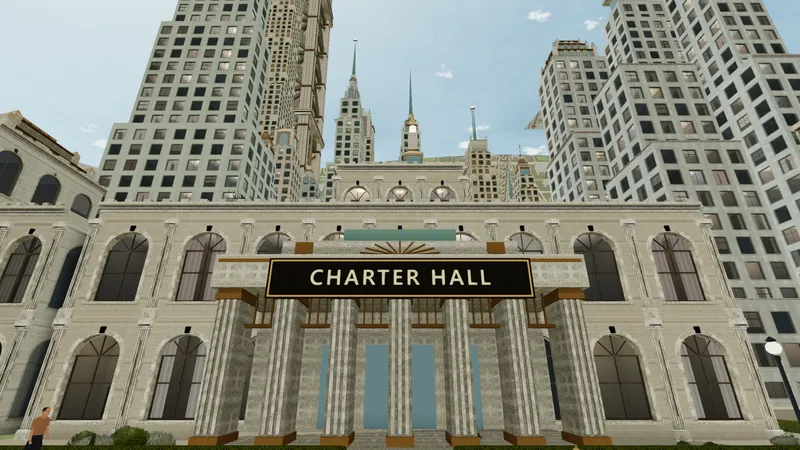
The seat of the Concordia Charter Authority, seen from the street in front of its portico. Gate towers and a vaulted roof stand over the colonnade in the densest core on the station.
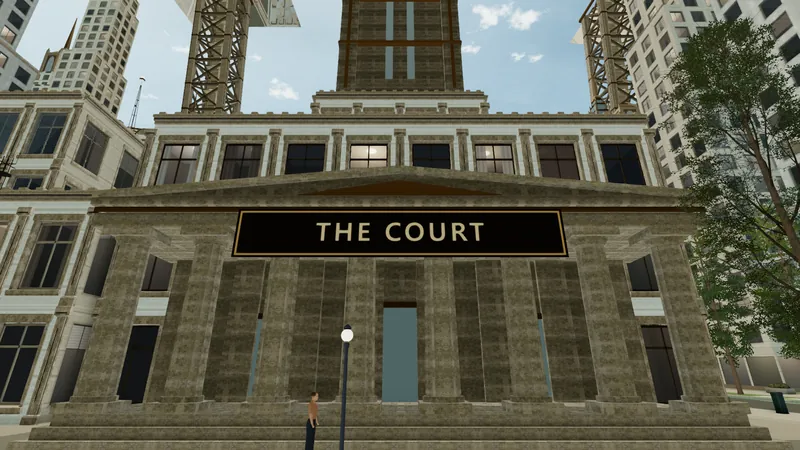
A columned portico and pediment on a street of civic frontages in Noordung. The arbitration courts sit here, in the same quarter as the Exchange and Charter Hall.
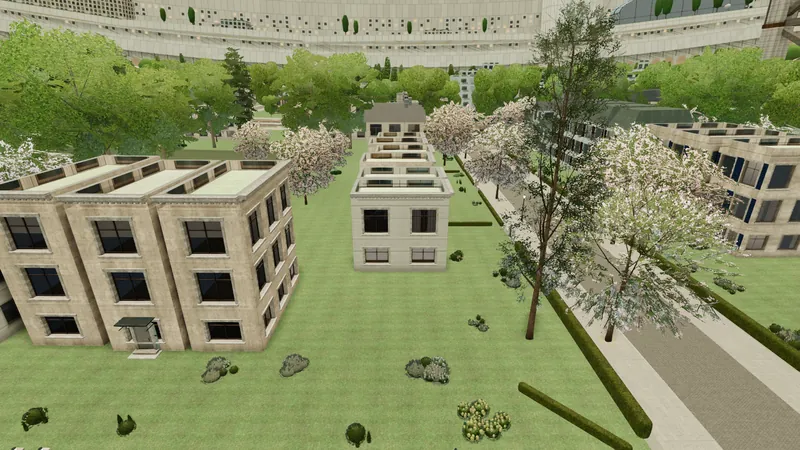
The estates of O'Neill (Rotor 4) from a raised walk: detached villas on lawns the size of a city block, with hedges and planted trees. The richest districts trade density for open ground, and the megaframe carries the density overhead.
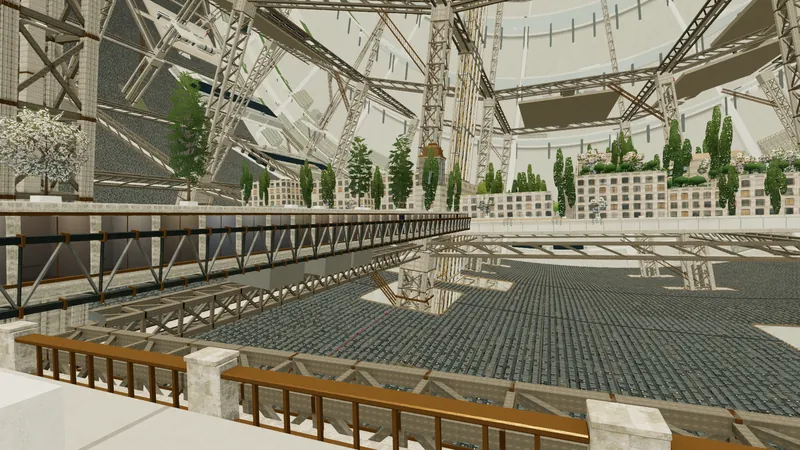
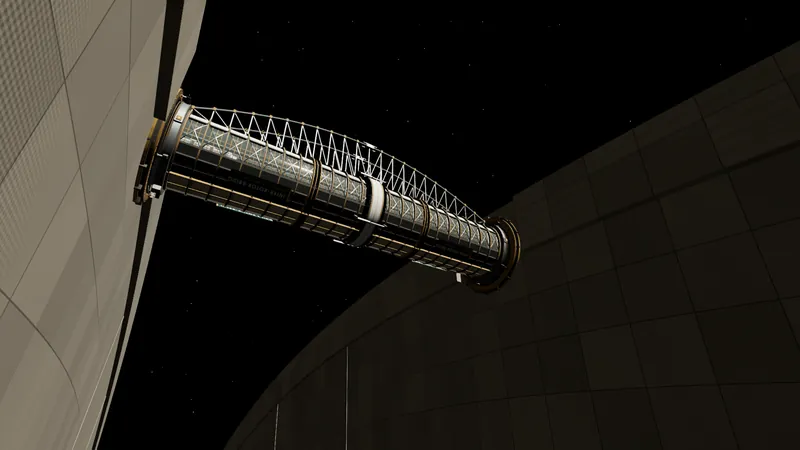
A raised quarter at 625 m, where weight is about 0.75 g. Planters line the deck edge, an inhabited bridge crosses the ring beam and, above the sky layer, the opposite upper city hangs overhead.
High in the frame, near 0.32 g, long-span structure opens into sparse atmospheric process halls. Everything is lighter here, including the way people move through it.
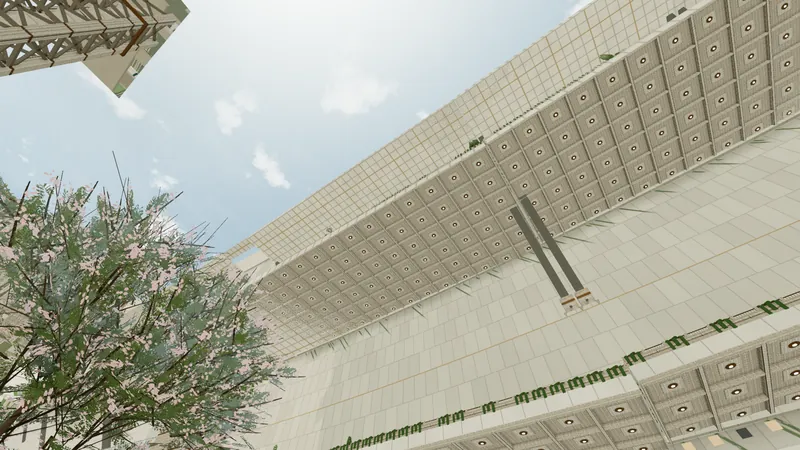
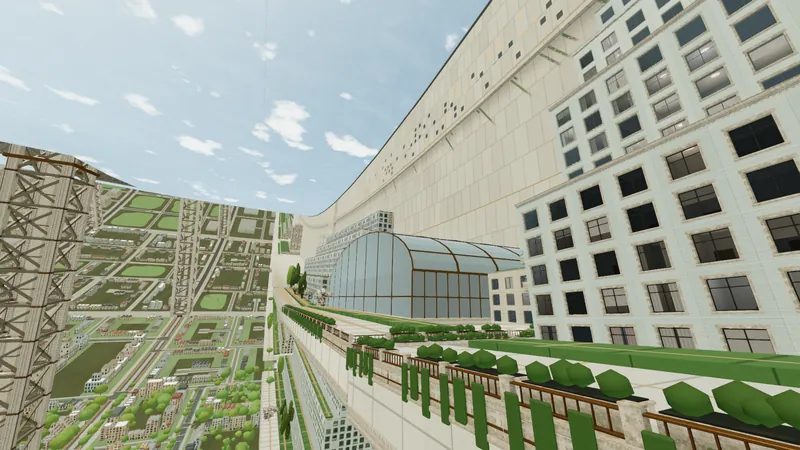
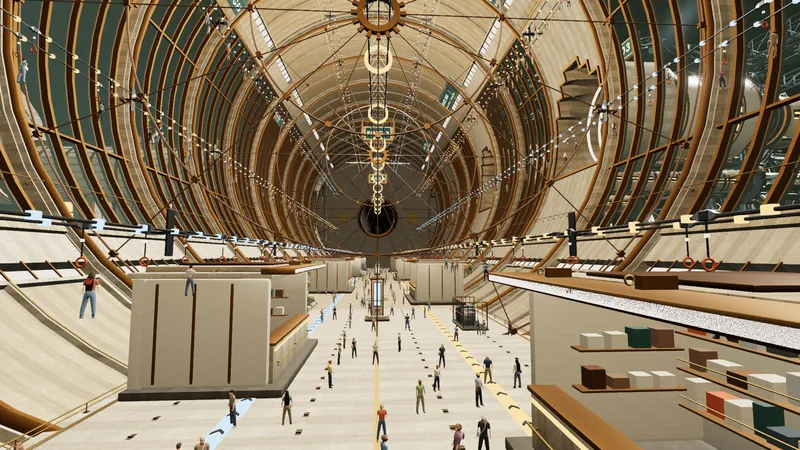
The end bay of Rotor 1 at the foot of its forward wall. Cantilevered ledges with coffered undersides step up, a train viaduct crosses the frame and a planted cliff rises to the sky seam.
A 241 m ledge on the forward end wall, at about 0.9 g. A train runs along the track strip, vines trail from the planters and the city lies 240 m below.
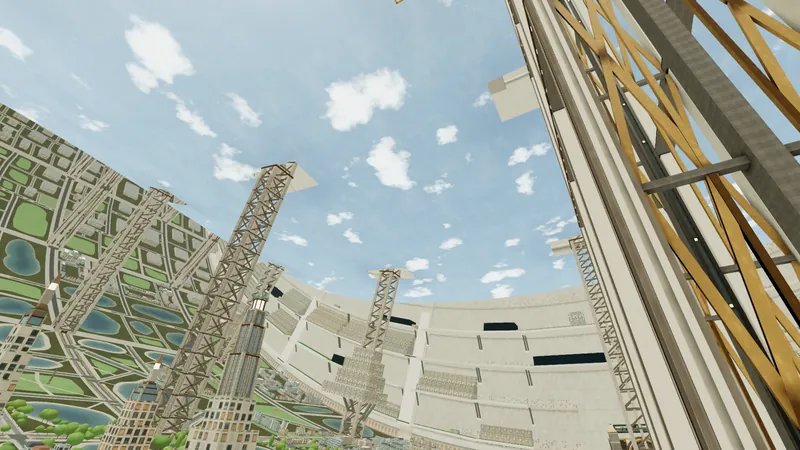
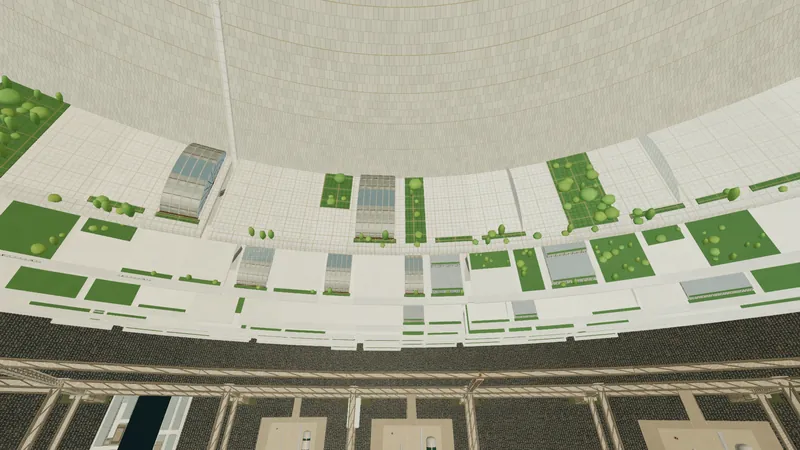
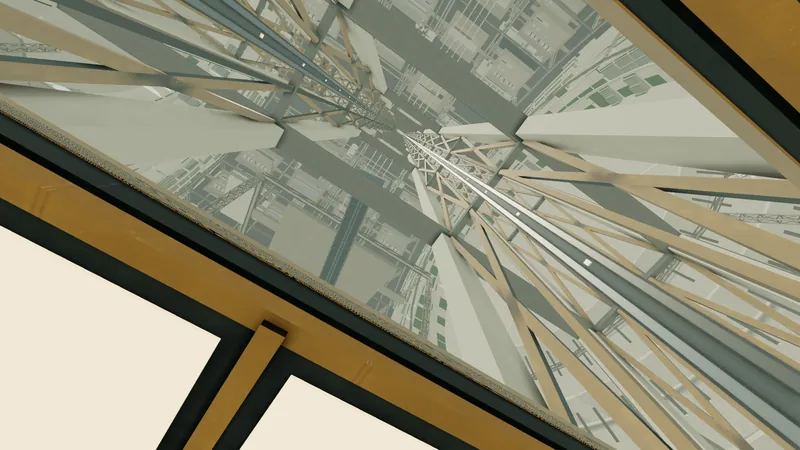
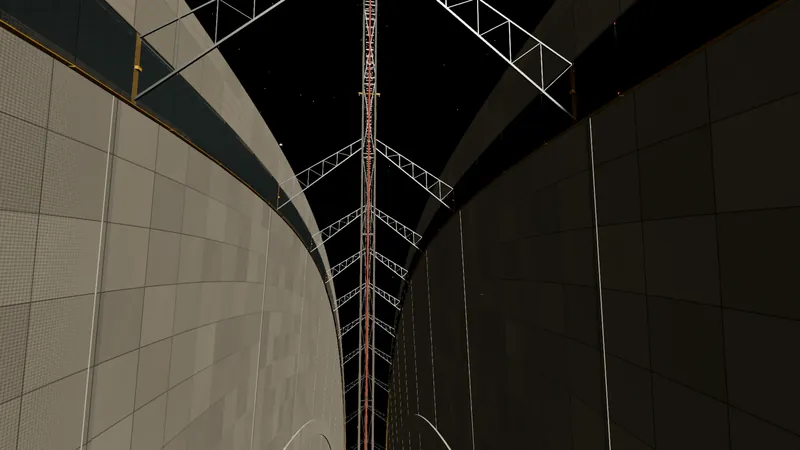
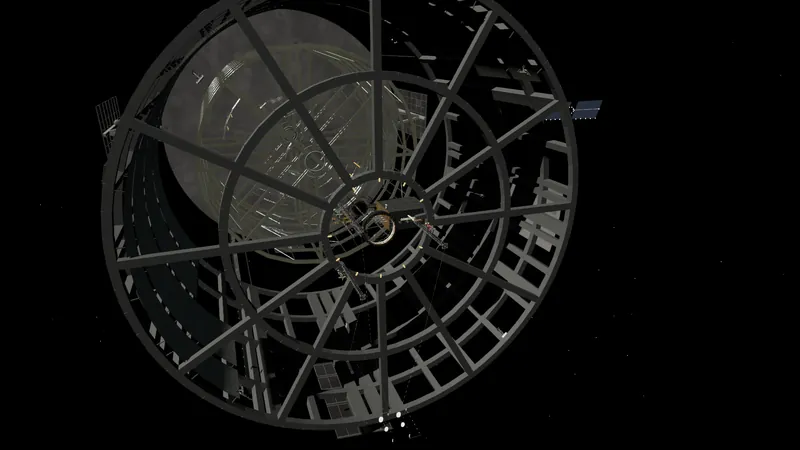
The upper end wall seen from about 2,150 m, at 0.14 g. Concentric ledge rings carry low-gravity halls, vaults and gardens, and the ribs thin toward the bore.
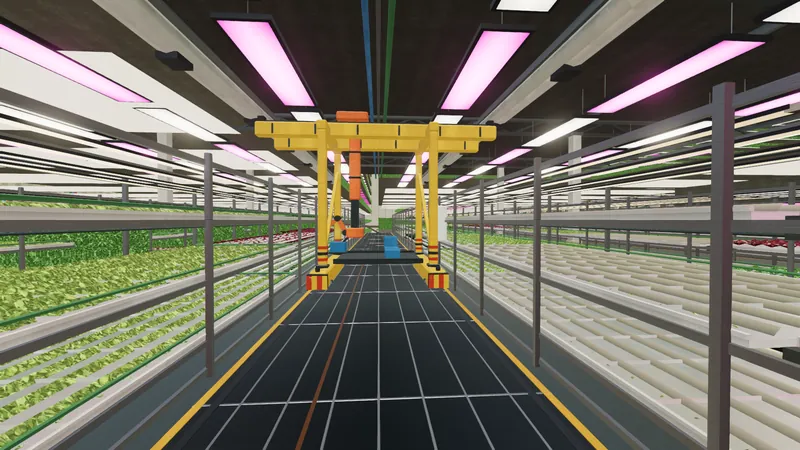
A visitor gallery above a deck of the farm hall. Racks of lettuce, basil and kale stand in four stages of growth beneath LED rigs, with nutrient channels and a harvest gantry.
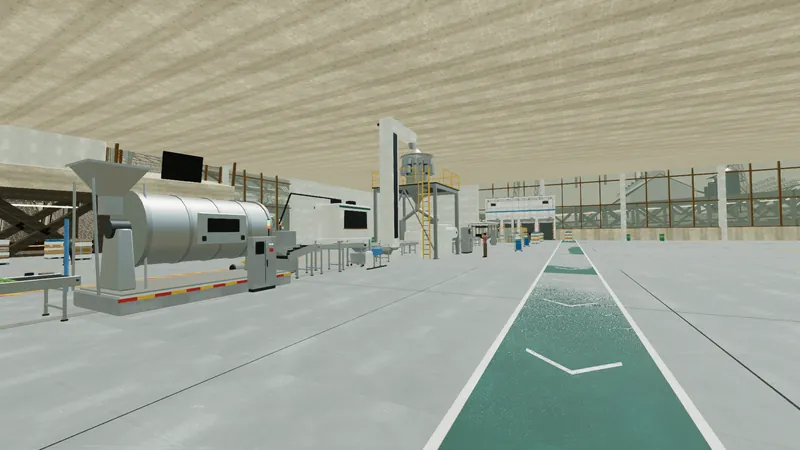
Totes arrive on a belt and pass the wash tunnel, the optical sorter and the weigher in the process wing. Most of what grows upstairs is on a city table soon after.
Crates of salad, trays of loaves, bottles and wrapped pallets leave the process wing on freight pods. Ordinary food, moving the way ordinary food does.
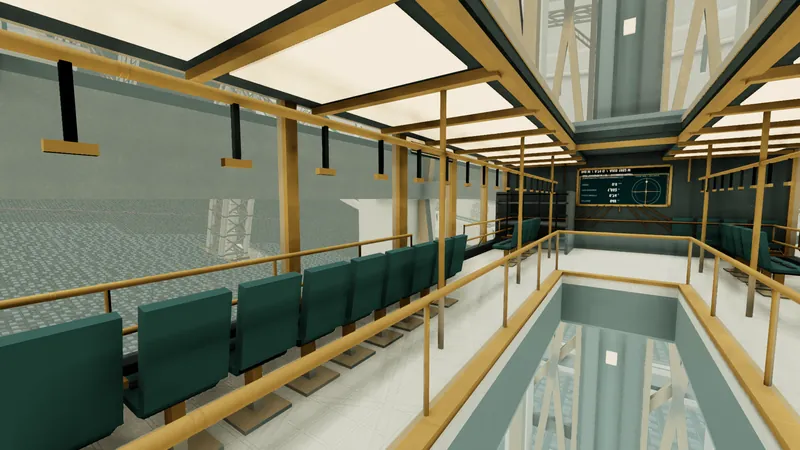
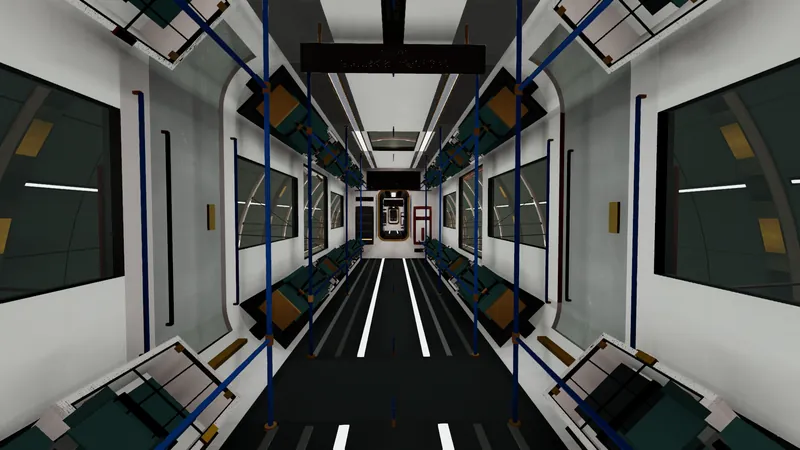
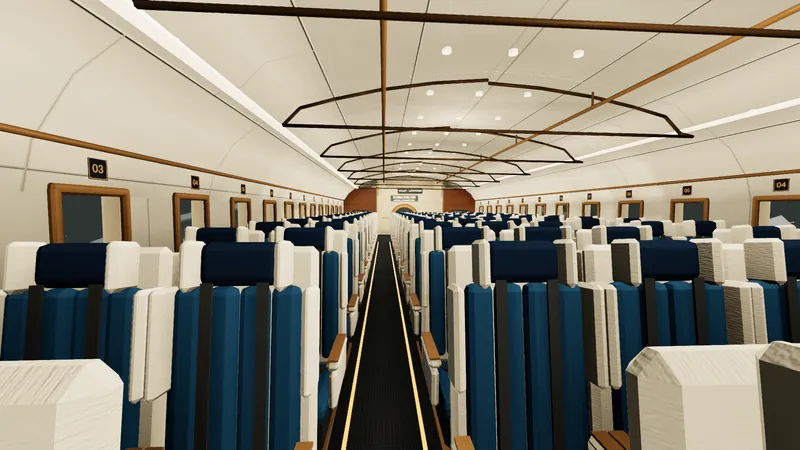
The panoramic cabin at 650 m, where weight is 0.74 g. Seats, rails and a glass floor gallery face the city curving up beyond the glass, with a live altitude and gravity readout.
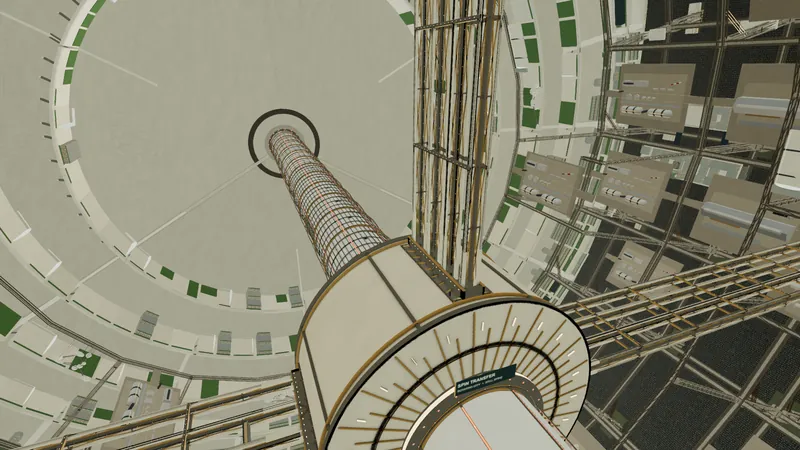
The hub drum turns behind its bearing collar, with four portals marked by bronze sunbursts. This is where the ascender cabins meet the stationary spine.
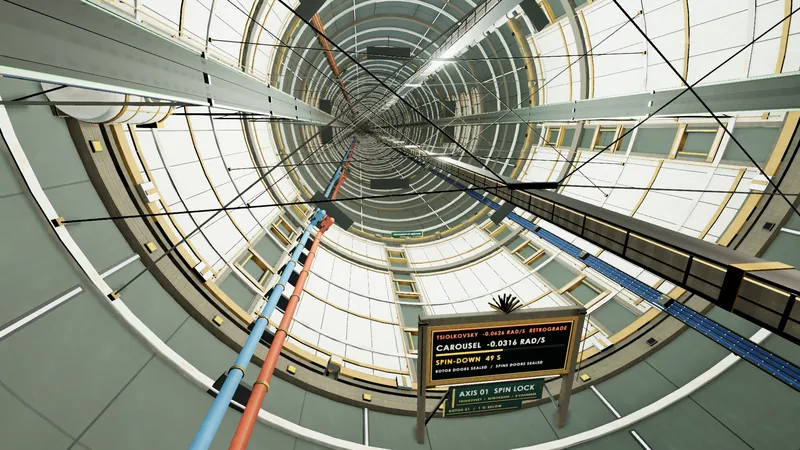
Inside the spine at the Rotor 1 hub, a carousel of eight chambers slows each carriage from rotor speed to rest in 96 seconds. An amber ring and a spin-rate display show the progress.
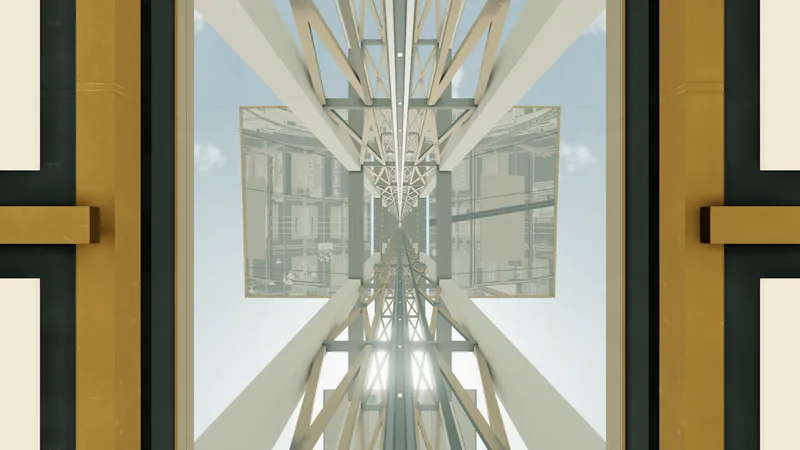
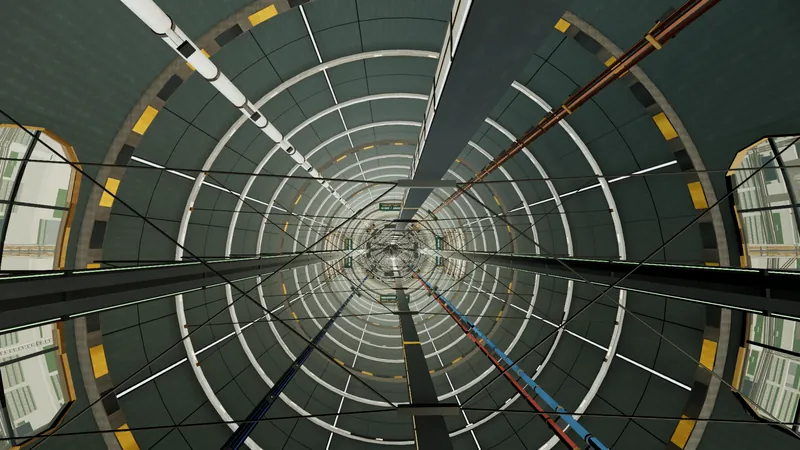
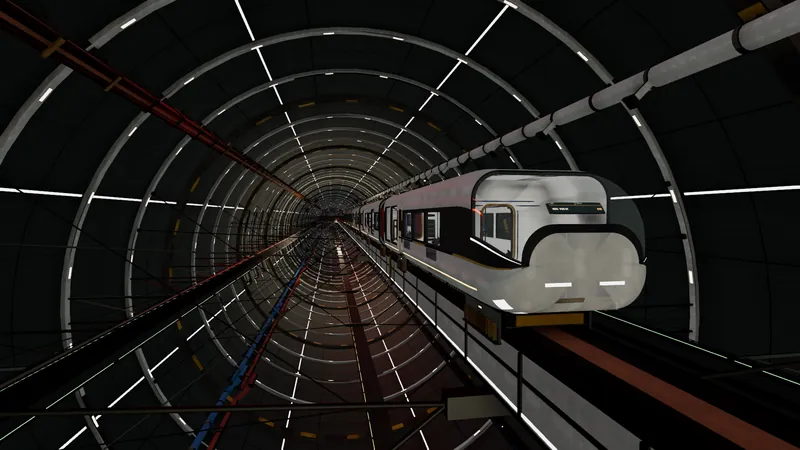
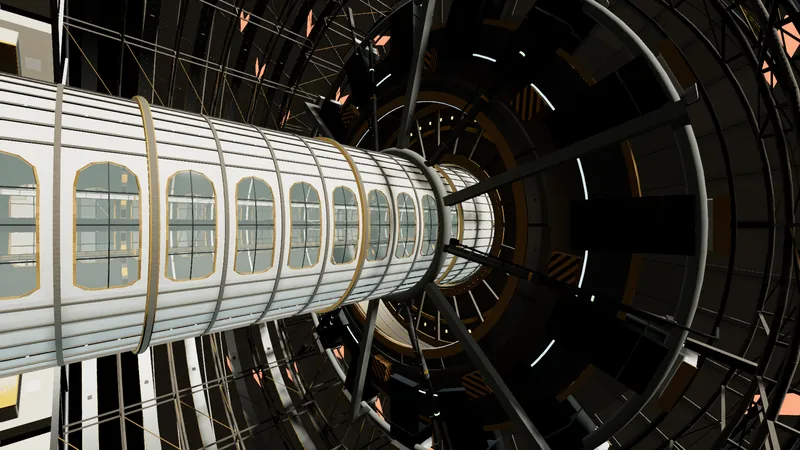
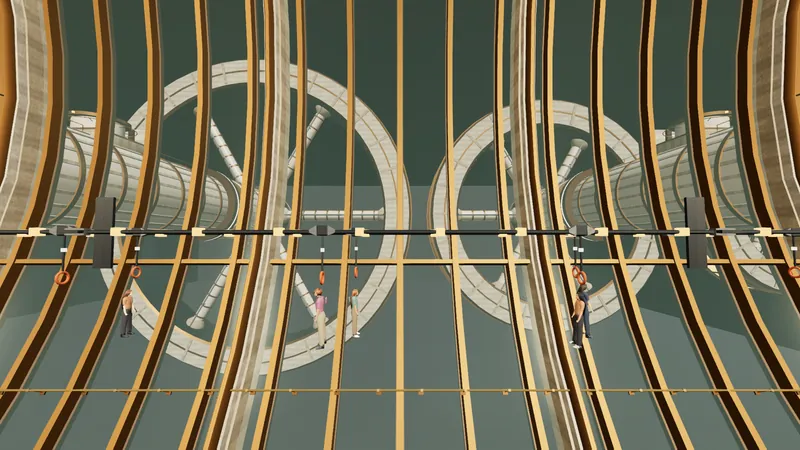
A 120 m tube that never turns, with ring lamps every 25 m, the express guideway on its stays, crew galleries and four utility trunks running its length.
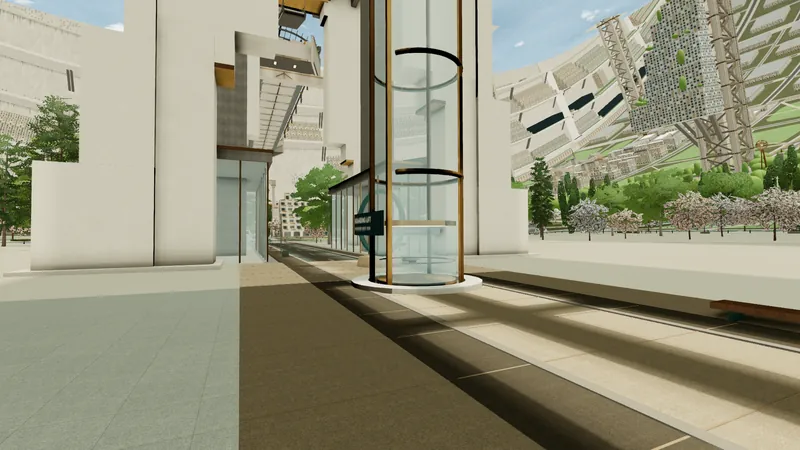
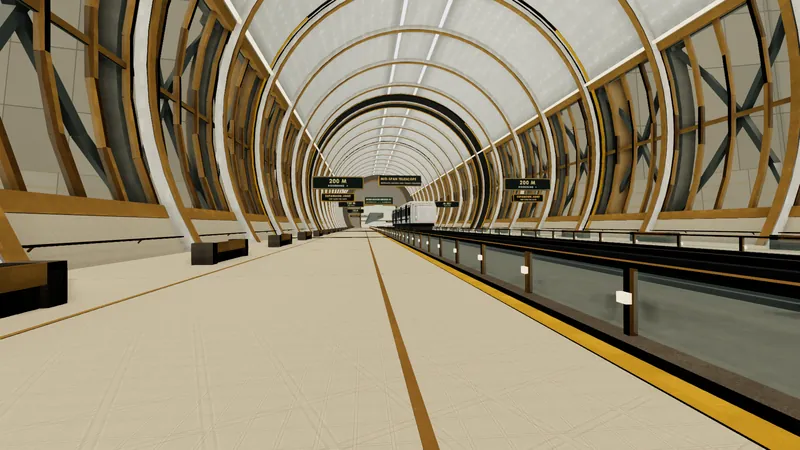
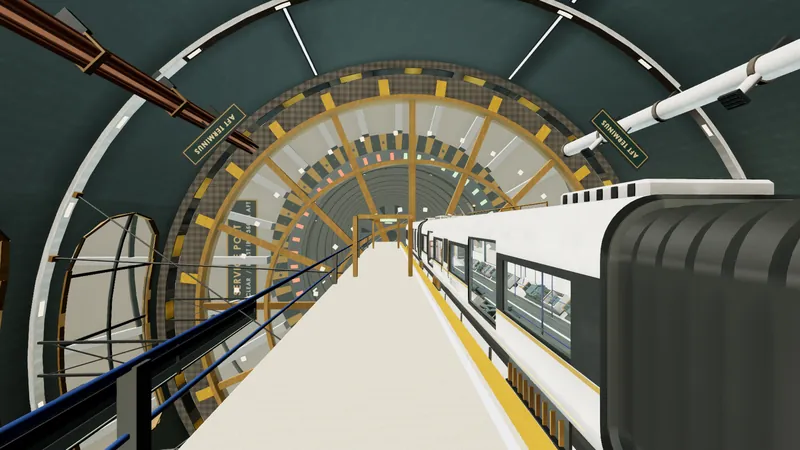
A promenade and a transit lane run side by side, with window bands on both sides and a shuttle on its guideway. The far pressure door marks the next rotor.
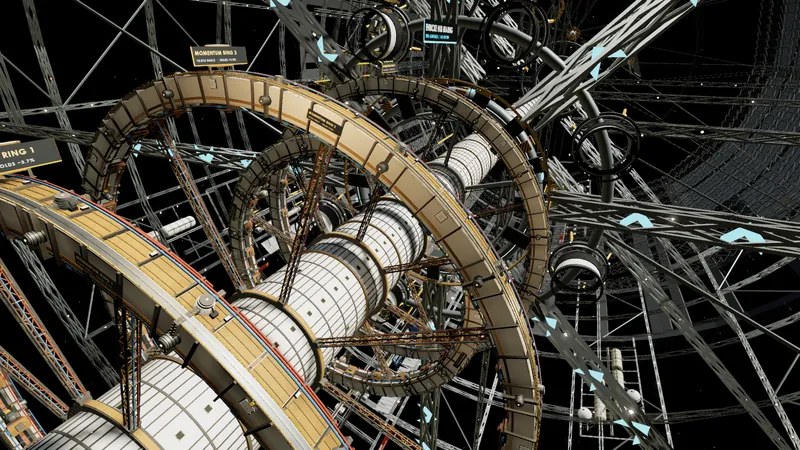
Rotors 2 and 3 turn opposite ways, so there is no bridge between them. A stationary service frame and slip seals fill the gap, and passengers cross through the spine.
Where Rotor 1 meets the stationary structure: a sleeve and rim turn against the stator on magnetic bearings, with catchers that never touch in normal use.
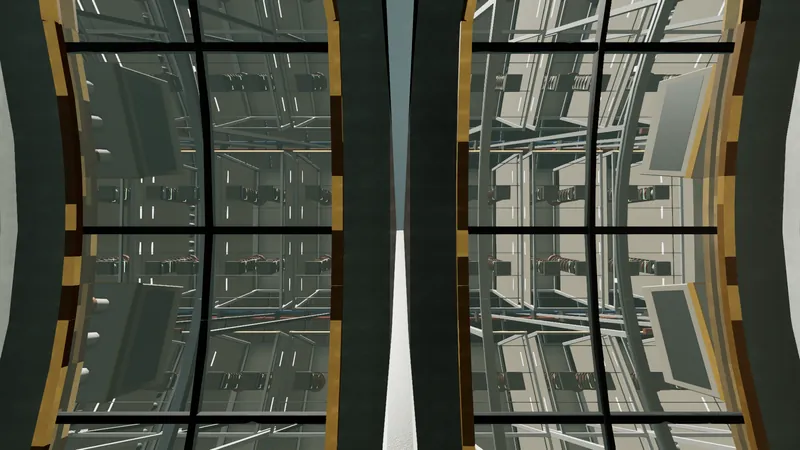
Through arched windows of the spine: rows of HVDC valve halls, breaker bays, capacitor banks and cooling headers. This is where solar power becomes city power.
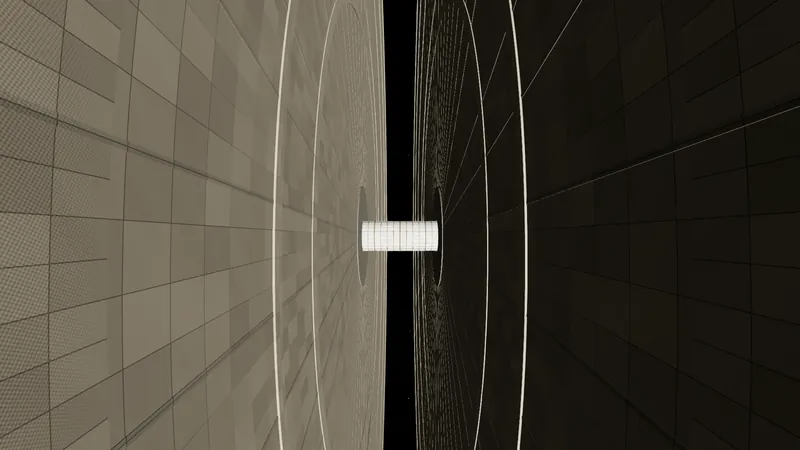
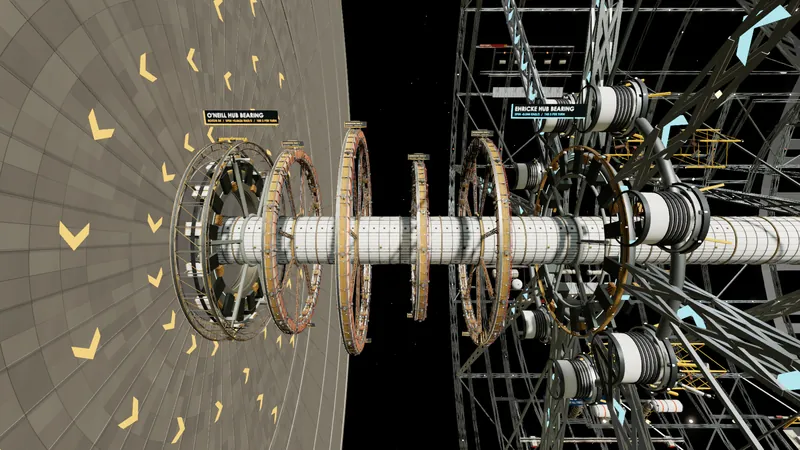
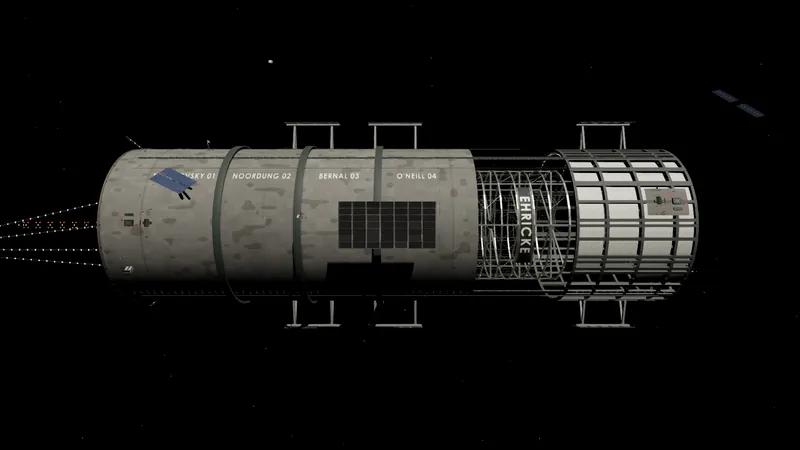
O'Neill (Rotor 4) and Ehricke (the industrial rotor) turn in opposite directions around the stationary spine, their hubs facing each other across the bearings.
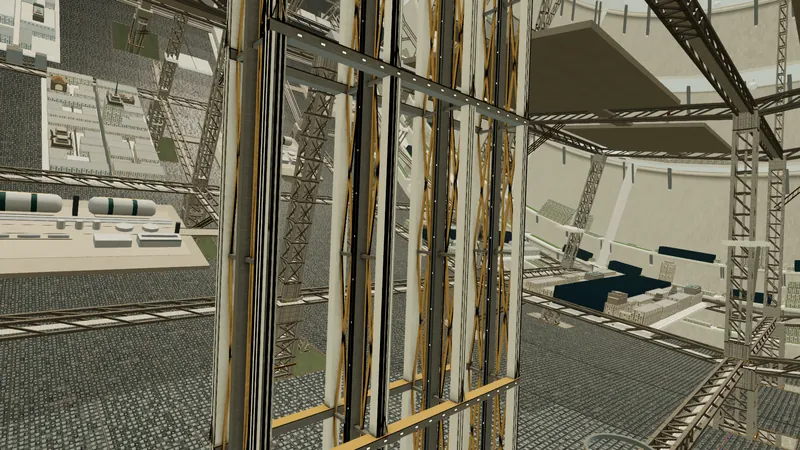
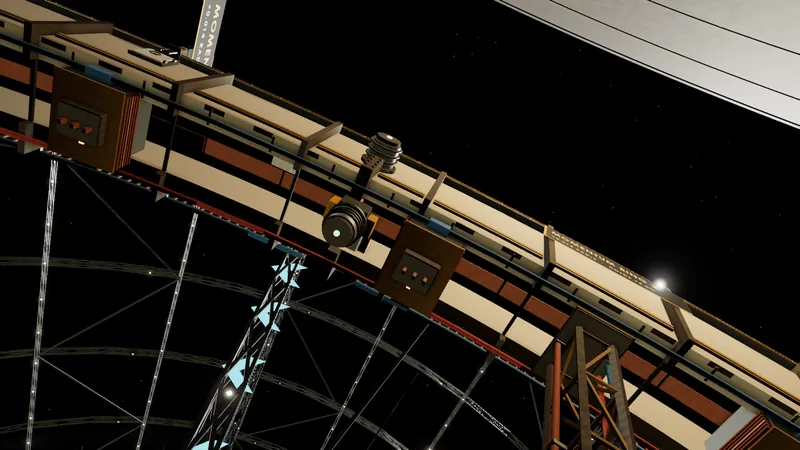
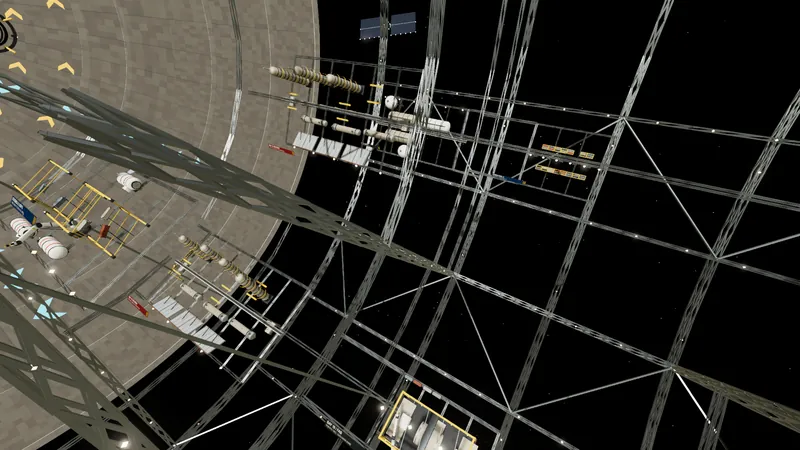
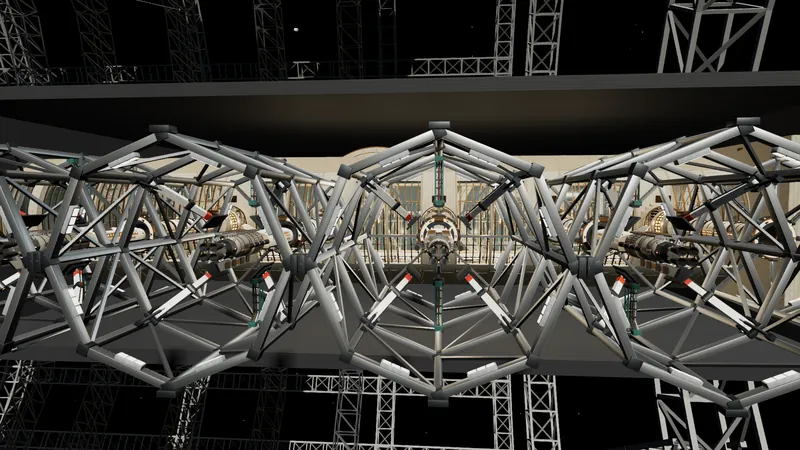
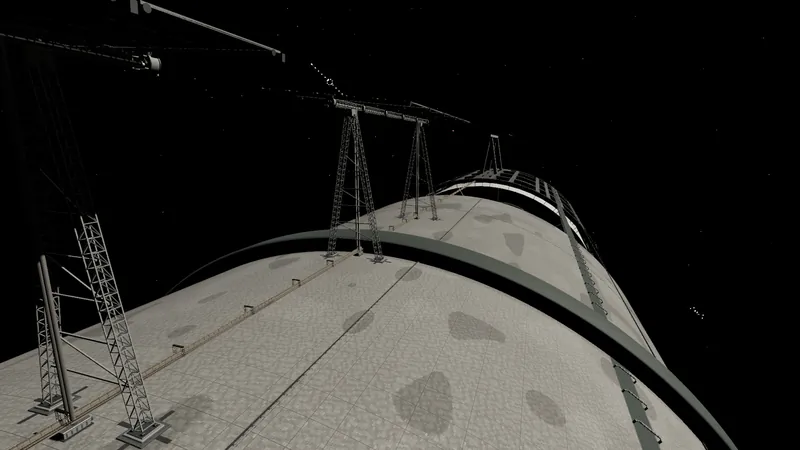
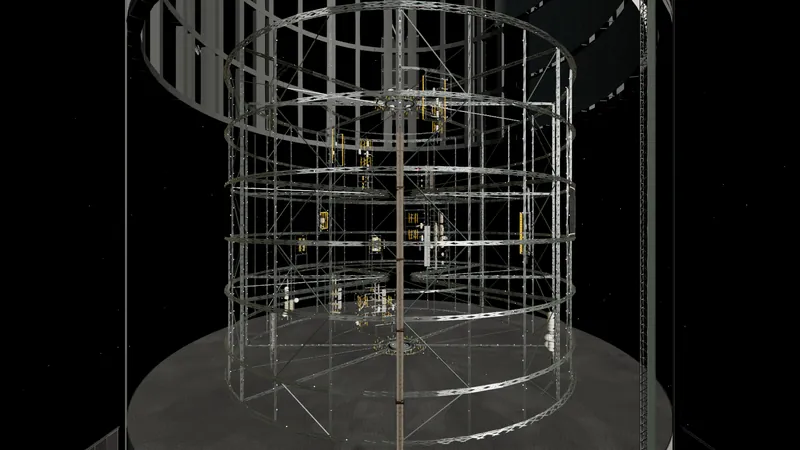
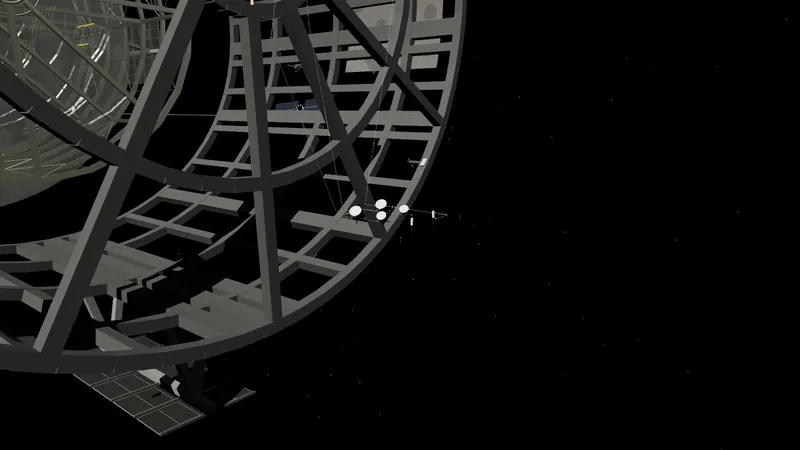
An open truss that is 70 to 80 percent vacuum, carrying cargo, tank farms and robotic logistics. Material from the Moon and the asteroids is stored and processed here.
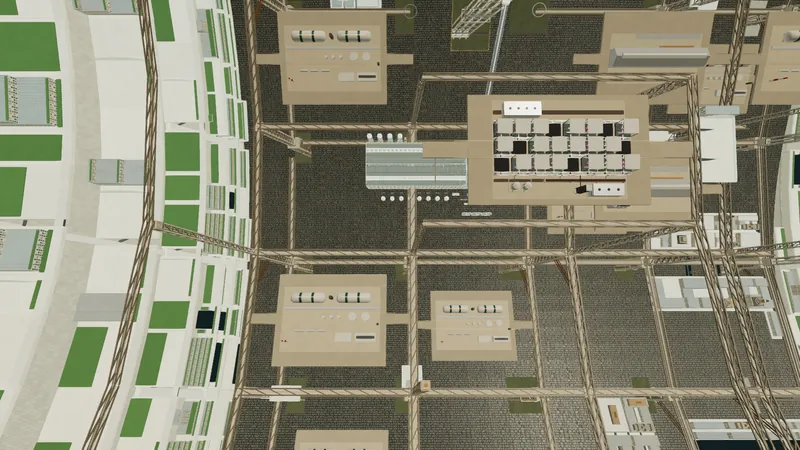
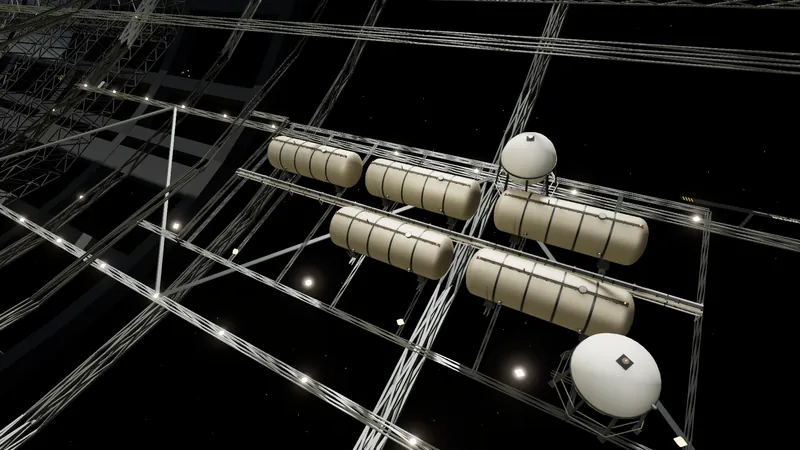
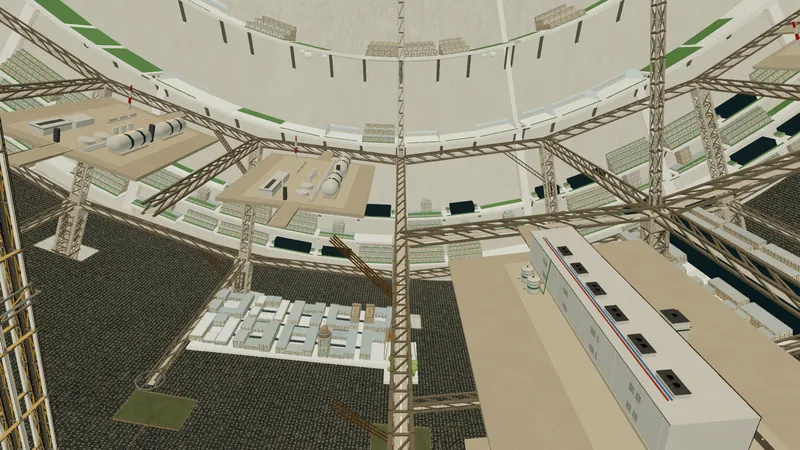
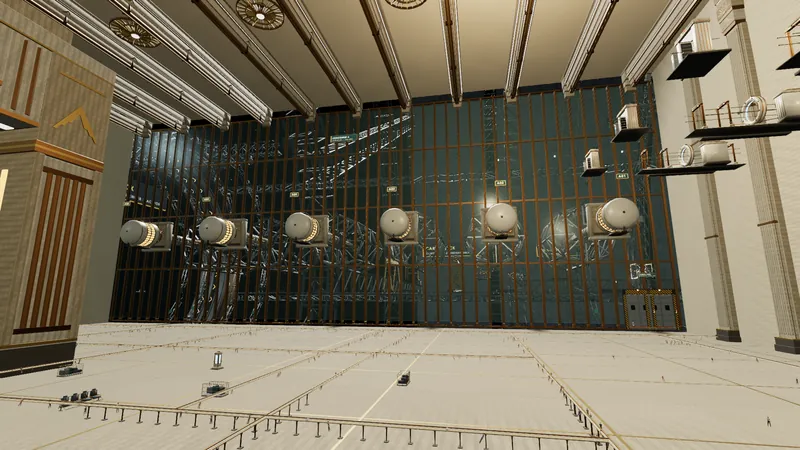
A tank farm on the outer band of Ehricke, the industrial rotor, at about 0.4 g. Six horizontal vessels and two spheres sit on a lattice deck in open vacuum. The view is from the middle band, looking outward.
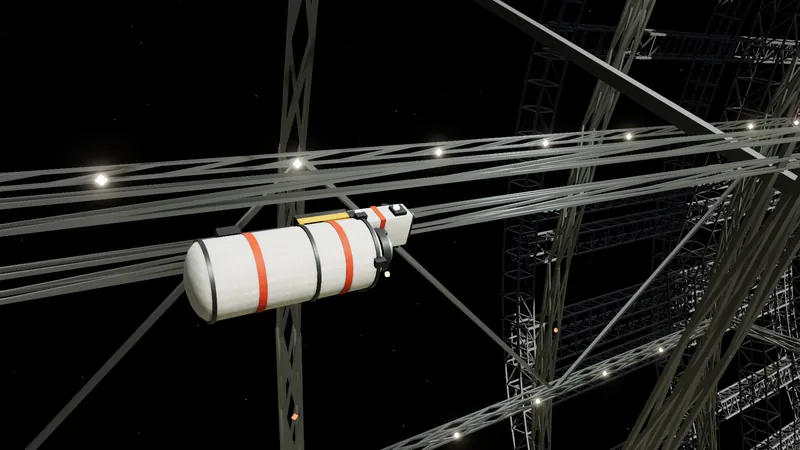
A cargo tug carries a pod along one of the axial rails in Ehricke's outer band. Tugs move slowly and deliberately along these rails, hauling containers between the two ends of the rotor.
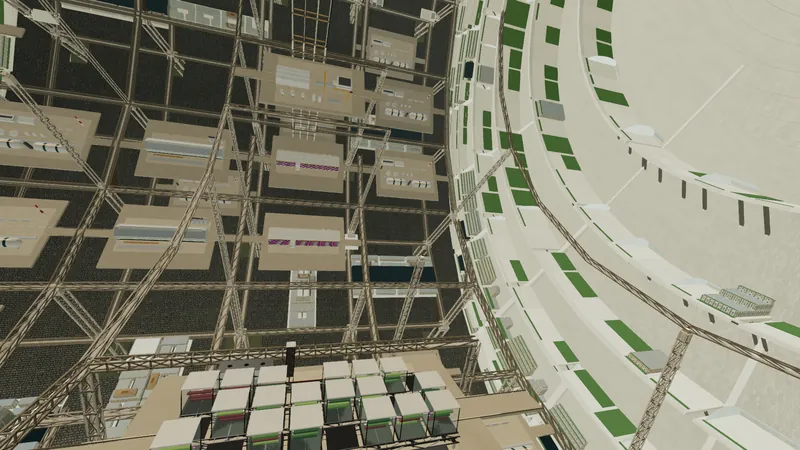
A grow gallery and a utility plant of the 1,000 m service tier, seen from the open fringe. Glazed rack faces glow white and magenta beside vessels, air handlers and pipe racks.
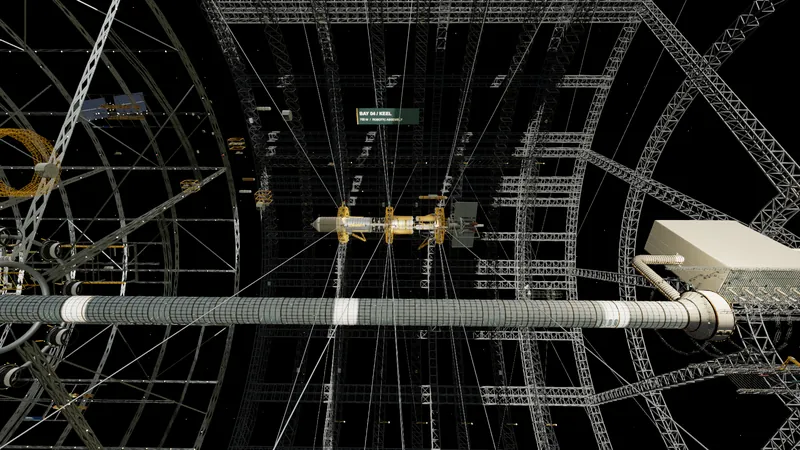
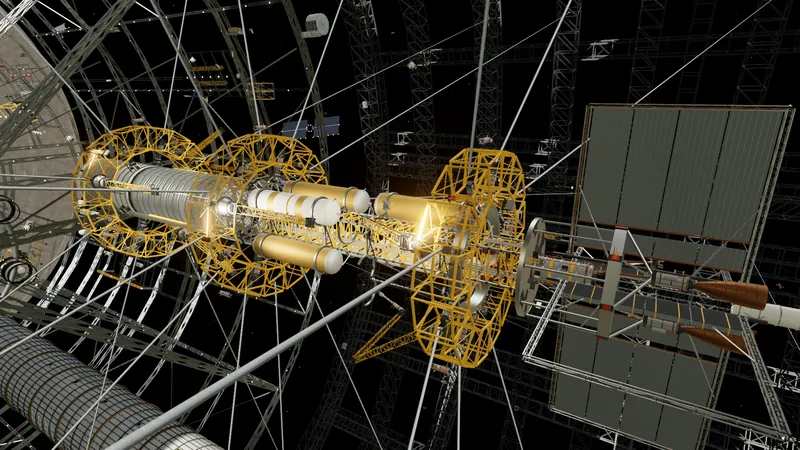
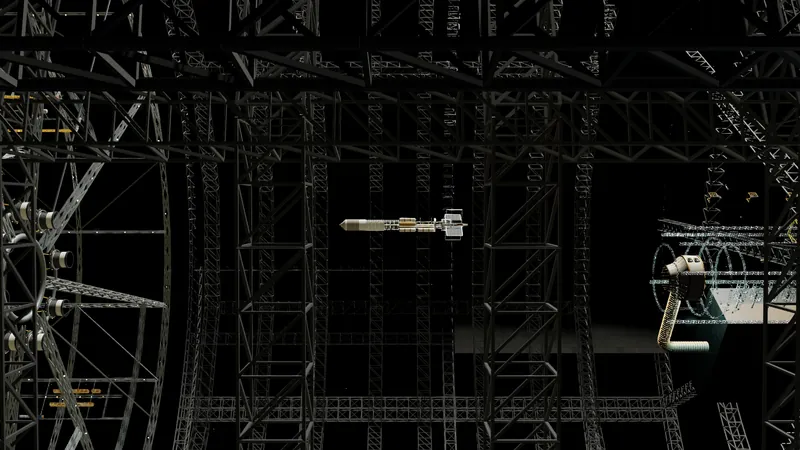
A spacecraft floats unsupported inside a construction volume much larger than itself. There is no floor, so frames, tanks and tugs hold it from all sides.
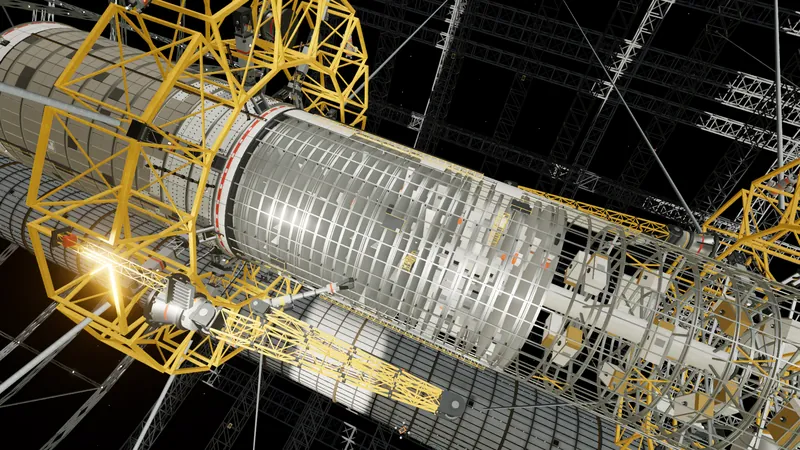
A tank on approach with its mover, held by tension lines, with crawlers and umbilicals around the cradles. The ship's propellant is built and fitted here.
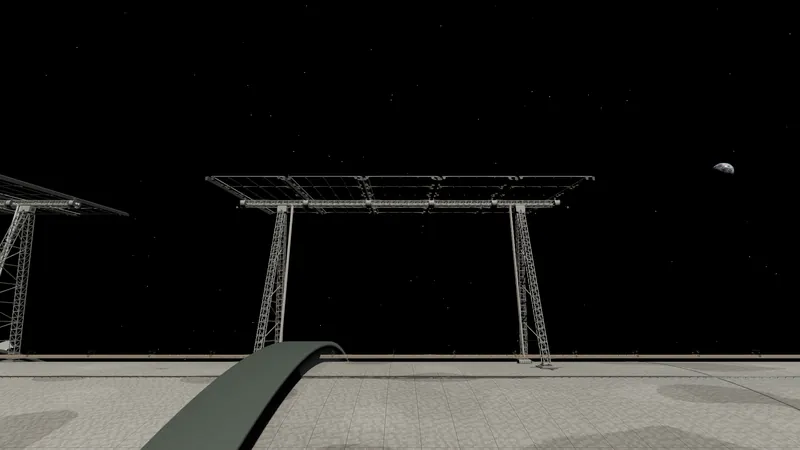
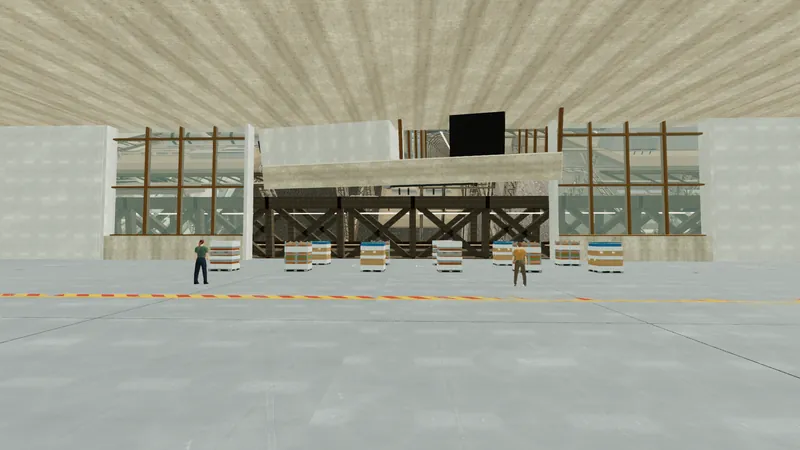
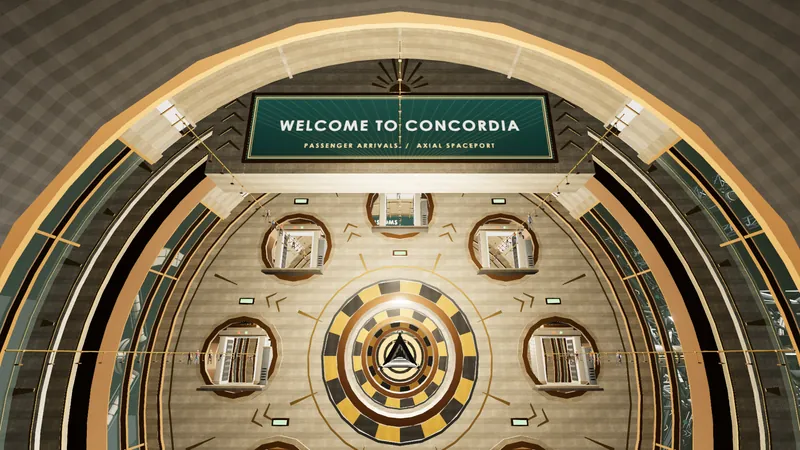
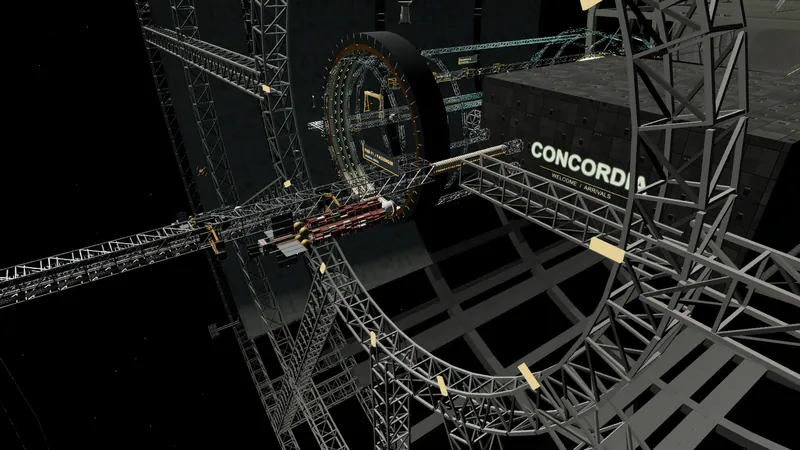
The arrival hall of the port, in stationary zero g. Signage, public structure and docking views make up the first look at Concordia for visiting passengers.
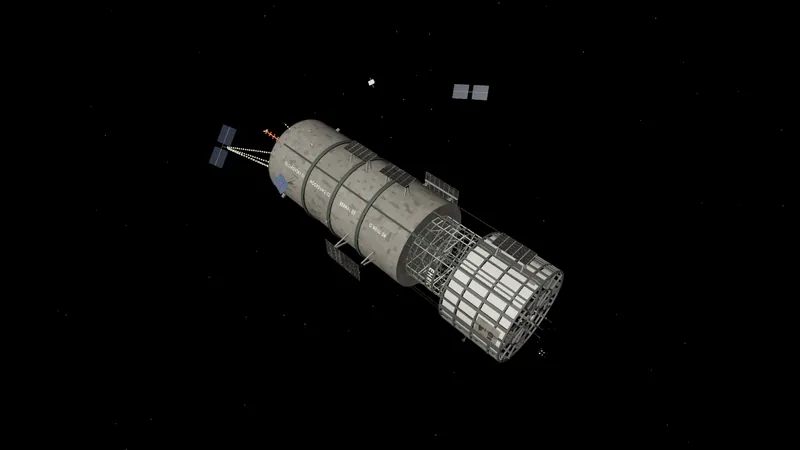
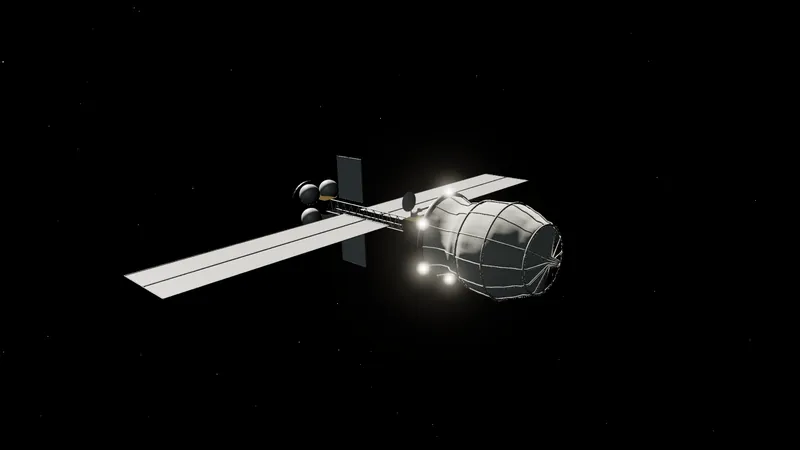
An asteroid hauler on approach: a 110 m truss, two 60 m solar wings and a thruster plate pushing a 22 m metal asteroid cinched in its net bag. Thrust is about 37 N, so a haul takes years.
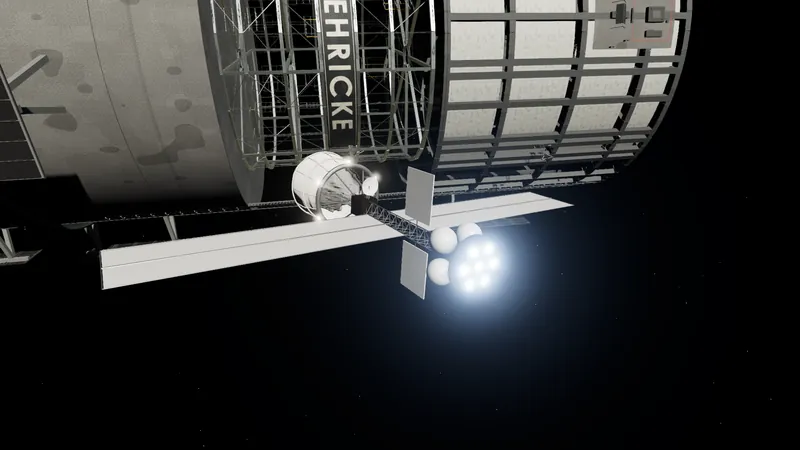
The seven Hall thrusters and propellant tanks at the back of the hauler, with the station beyond. The hauler burns about 120 t of propellant per 30,000 t haul.