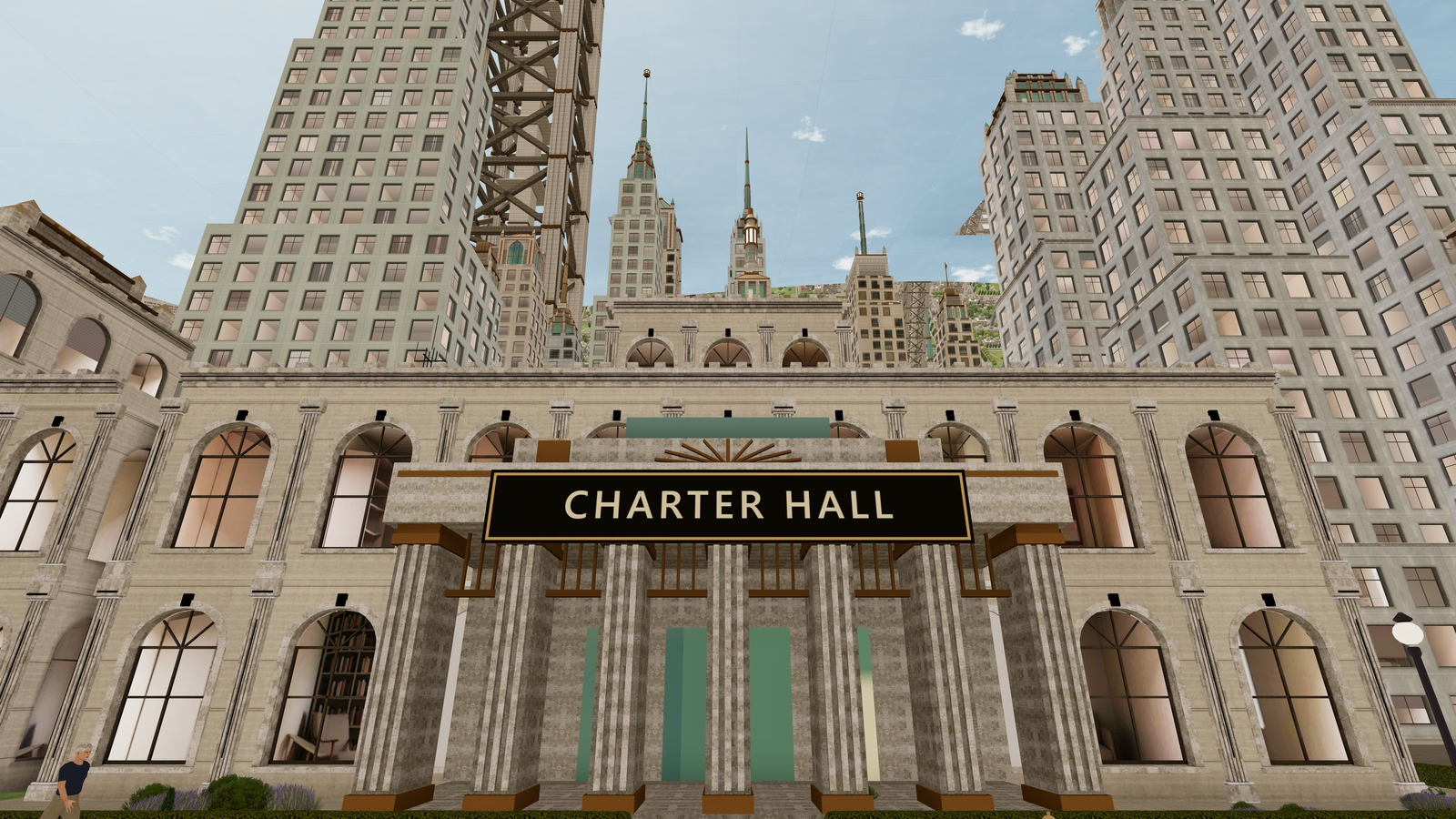
This page mixes two kinds of claim, and each is tagged. Treaties, statutes and court decisions are real and in force today; they carry the Law in force Challenge this: Law in force claim tag and a source. How Concordia itself is run is the 2045 story; it carries the Story tag. What the tags mean.
Nobody owns the sky
The Outer Space Treaty of 1967 says space "is not subject to national appropriation by claim of sovereignty, by means of use or occupation, or by any other means". Law in force Challenge this: Law in force claim So no flag can be planted at L5, and the station cannot be anyone's territory. It can be someone's property. The same treaty says that a state keeps jurisdiction over objects on its registry and over the people aboard, and that ownership of an object is not affected by being in space. Law in force Challenge this: Law in force claim
That is the opening the whole design uses. In law Concordia is a very large registered object, closer to a ship than to a piece of land. A ship flies one flag, has a genuine link to its flag state, and answers to that state's law wherever it sails. Law in force Challenge this: Law in force claim Property can be governed by its owners.
A British charter at L5
The treaty makes each state answer for its nationals' activities in space, private ones included, and requires "authorization and continuing supervision". Law in force Challenge this: Law in force claim Concordia's owners are a Bermuda company, so the United Kingdom answers for them. The 1986 Outer Space Act, extended to Bermuda in 2006, makes the Governor the licensing authority, and a Bermuda licensee indemnifies the UK government, not Bermuda: the money follows the treaty liability. Law in force Challenge this: Law in force claim Bermuda is already in orbit through the UK's satellite filings, including a Bermuda slot at 96.2 degrees west operated since 2013. Law in force Challenge this: Law in force claim For why Bermuda, see Charter and law.
One gap is real. The Registration Convention covers objects "launched into Earth orbit or beyond", and scholars list as open whether a structure built in space from lunar and asteroid material counts, and who its launching state would be. Law in force Challenge this: Law in force claim In the story the United Kingdom closed that gap on purpose, before the seed factory left Earth, by registering Concordia as a British space object. A registry is what carries jurisdiction, and an unregistered object would invite every state to claim a say. Story
The floor is short: a licence, a registry, criminal law and a final court of appeal. Everything else aboard is contract.
Owners, not voters
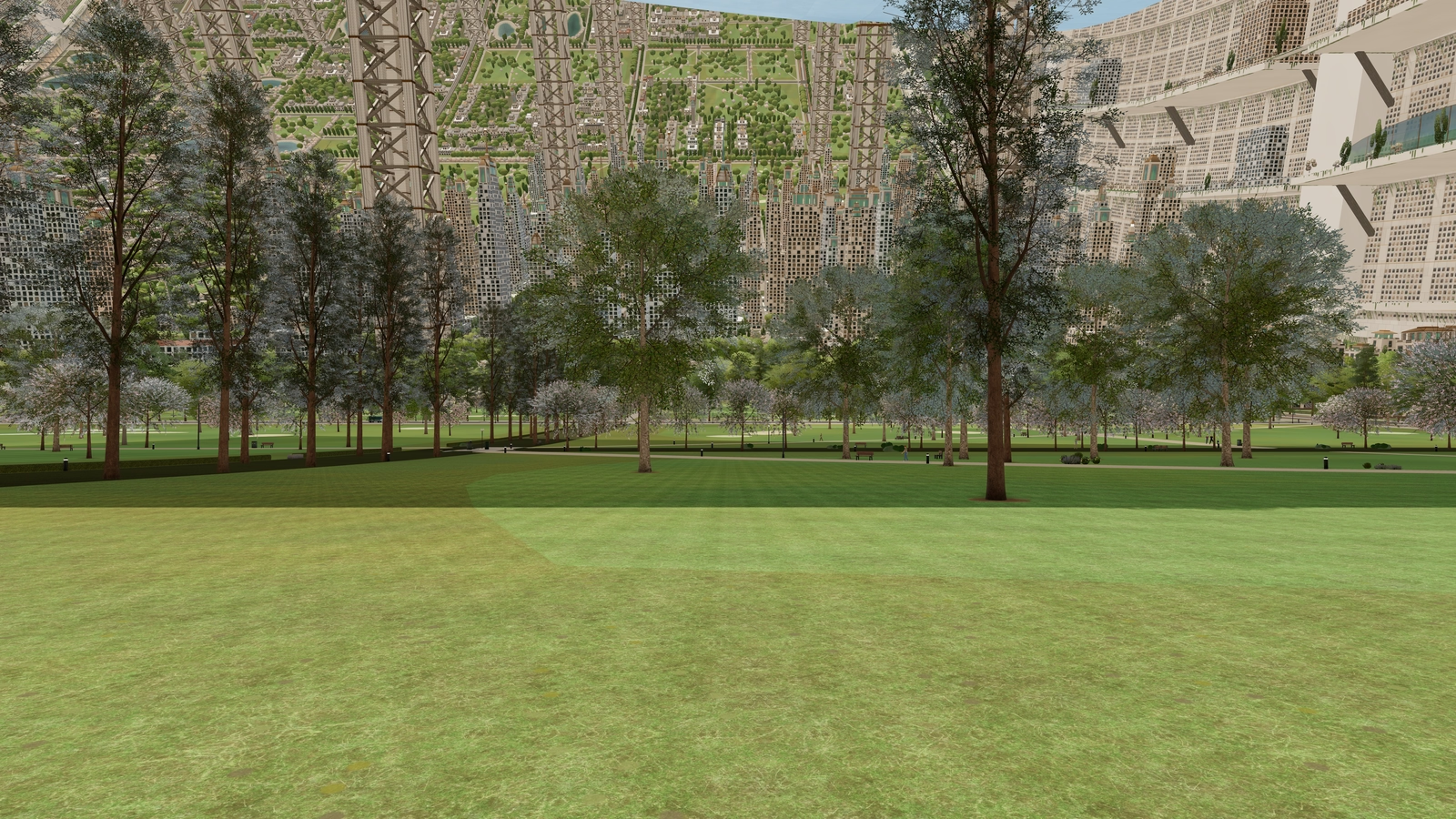
From here the page leaves real law and describes the story. In Concordia's 2045, the station is governed the way a company is, not the way a country is. Story There are two share classes. Founders' shares are the consortium's capital and vote by stake. Resident shares are one per resident: they are never diluted, never sold to an outsider, and they carry the energy dividend. A resident qualifies after a full year living aboard under a residence contract, and the same test gives the share, its vote and its dividend.
The Proprietors' Council is the board, elected by all shares. It runs industry, leases, the compute and energy sold through the Exchange, and the next station. It cannot change the Covenant alone. Residents, meeting as a class, elect the residents' authority that runs air, water, pressure, heat, fire and spin on separate verified controllers (safety). The Concordia Charter Authority in Charter Hall holds the licence and acts as the owners' agent for common services: the register of plots and volumes, the rulebook of the Exchange, the text of the Covenant. It levies no taxes.
There is no one-person-one-vote assembly over the business. A resident who dislikes the management votes their class, takes the case to the Court, or leaves. Real precedents exist for each piece. Company law lets the rights attached to a class of shares change only with that class's consent. Law in force Challenge this: Law in force claim Alaska Native corporations give each member a share that is owned rather than granted, restricted from sale and paying out resource income. Law in force Challenge this: Law in force claim The residents of MS The World own their homes inside a flagged, moving object and elect a board that directs management. Law in force Challenge this: Law in force claim The City of London counts business voters, 13,748, alongside residents, 6,475. Law in force Challenge this: Law in force claim
Open in the simulation: Stand at Charter Hall
What nobody can sign away
Everything in this section is the story. Concordia's markets run on top of a strict physical constitution, and these are its seven clauses. They are terms of the Covenant that every resident, proprietor and business aboard signs, and each changes only by two thirds of each share class voting separately, plus the Governor's assent. They are also conditions of the licence. Story
| Clause | Rule |
|---|---|
| C1 Breath is not collateral | Air, water, pressure, heat and weight are never withheld from a person or home for debt. A creditor can take property and income, never breath. |
| C2 Life support is paid first | A service charge in every lease, and a first charge on energy revenue before the dividend and before profit. The only compulsory payment aboard, and every payer signed for it. |
| C3 Life support answers to those who breathe it | Separate verified controllers, manual valves and breakers, and an operator elected by the Resident class. |
| C4 No single command | No person, company or machine holds a command that can vent every city, stop every bearing, cut all cooling or shut every power source. |
| C5 The door is open | Every resident can leave at no cost from a bond held on Earth. Nobody is held aboard for debt or by contract. |
| C6 The line to Earth stays open | The operator cannot cut a resident's link to lawyers, consulates, press, family or other employers. |
| C7 Every resident owns | One Resident share each, on the same terms, never diluted, paying the energy dividend. Property, not a benefit. |
On Concordia, breath is not collateral. In an emergency over pressure, fire or spin, the residents' authority acts first and asks later. Its orders lapse unless the Resident class renews them, and the Court reviews each one.
Courts and security by contract
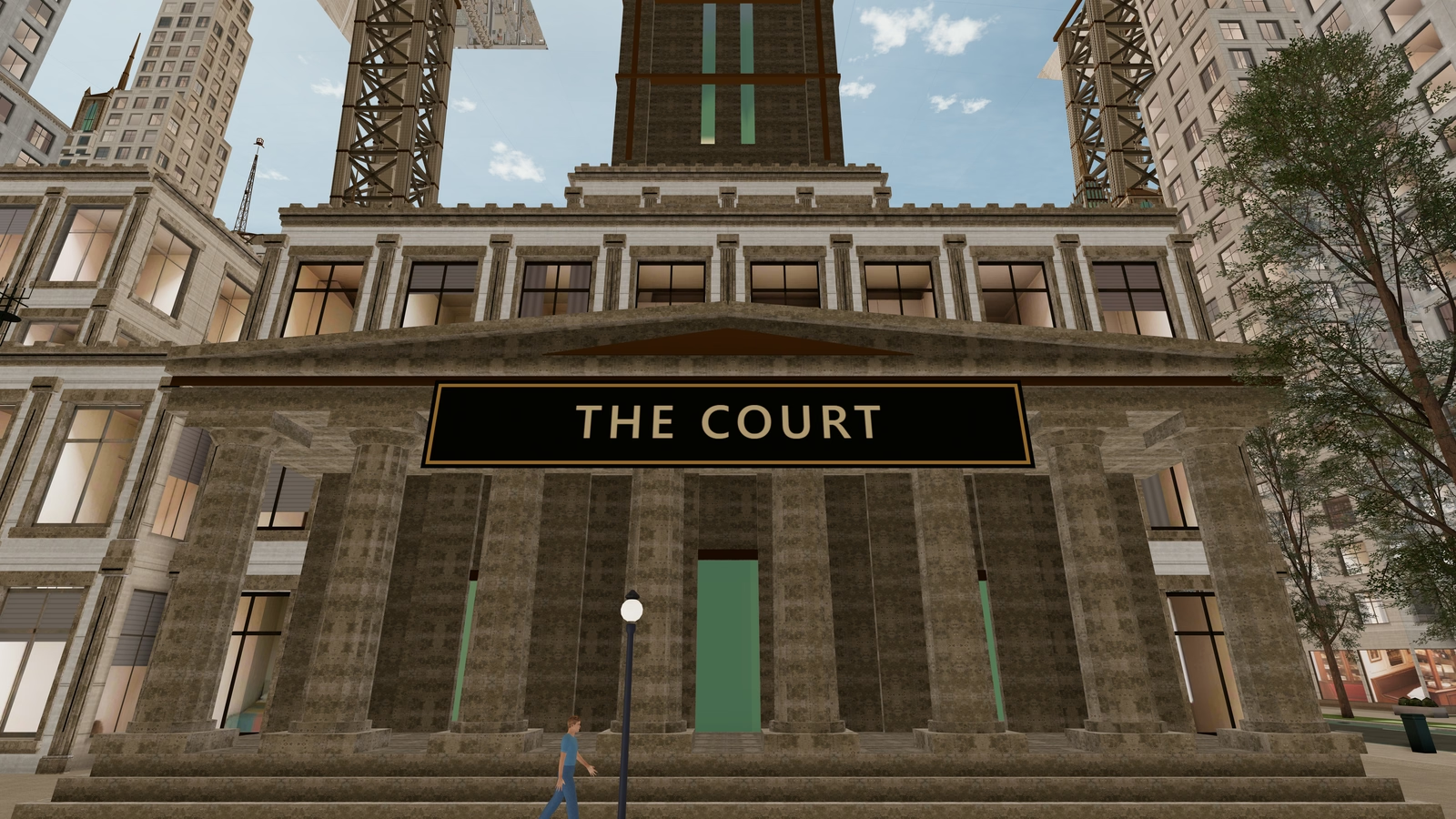
In the story, civil life runs on contract. Every lease, job and sale names its arbitration provider, and several providers compete for that business inside the Court. Story Awards are enforceable in more than 170 states through the New York Convention, which the UK extended to Bermuda in 1980. Law in force Challenge this: Law in force claim Special jurisdictions already sell courts as a product: Abu Dhabi's market applies English common law directly, and Dubai's financial centre runs its own common-law courts. Law in force Challenge this: Law in force claim
Day-to-day security comes from private firms under contract with the Charter Authority and with building owners, liable in contract and tort for what they do. Story Contracted guards already outnumber sworn police in the United States. Law in force Challenge this: Law in force claim
The floor is real law. Bermuda's criminal law applies aboard, and a sitting division of the Supreme Court of Bermuda tries crimes and hears anything no contract covers. Appeals go to the Court of Appeal for Bermuda and finally the Privy Council. The Governor is responsible for the police under Bermuda's constitution, so a small detachment holds the arrest and charging powers private guards lack. Law in force Challenge this: Law in force claim Home states keep concurrent jurisdiction over their own nationals, as the partners of the International Space Station do. Law in force Challenge this: Law in force claim Earth courts already handle claims about conduct in orbit: in 2019 an astronaut's estranged spouse claimed an account had been accessed from the station, and the accuser was later convicted of false statements. Law in force Challenge this: Law in force claim
Open in the simulation: Stand outside the Court
Owning a home in a space object
In the story, homes are long leases of plots and volumes inside a registered object, recorded in the Charter Authority's register and held under the Covenant. Millions of people on Earth already live under recorded covenants and service charges in owners' associations and condominiums, so private covenant government is ordinary. Law in force Challenge this: Law in force claim Mortgages work like ship mortgages. The builder owns the ground and floor space it created and leases it, the land value capture model, which is why ground rent is enough to run a city. Story
Rent, not taxes; passports; the way home
In the story, Concordia levies no taxes inside. The Charter Authority is paid by ground rent and by fees for services people choose to buy, and life support by the service charge in every lease. Story The taxes that do apply are real, and come from Earth. Bermuda charges no personal income tax and, from 2025, taxes the Bermuda entities of multinational groups with revenue of at least EUR 750 million at 15 percent. Law in force Challenge this: Law in force claim A United States citizen is taxed wherever they live, and income from space activity is US-source. Law in force Challenge this: Law in force claim
Residents keep their own nationality. Living aboard does not make anyone Bermudian: status takes about ten years of residence, or ten years of marriage plus ties. Law in force Challenge this: Law in force claim Every resident holds a funded passage home, a bond held off the station on the model of the repatriation guarantee that seafarers have. Law in force Challenge this: Law in force claim It is a right for one person at a time. It is not a promise to evacuate the city, which the design rules out (safety). Story
The questions science fiction asked
Most stories about governing a settlement are failure stories, and most failures are failures of power. The story's design answers each with property, contract and exit.
| Failure | The story | Concordia's answer |
|---|---|---|
| A distant authority drains the colony | Heinlein, The Moon Is a Harsh Mistress (1966) | No authority with power to tax or to be the only buyer; anyone can sell through the Exchange or direct to Earth; every resident owns a share of the revenue |
| The company town | Outland (1981) | Residents are owners, not tenants; no scrip and no company store; courts chosen by the parties; the door is open |
| Air sold by the litre | Corey, The Expanse (2011 on) | Clauses C1 and C2: air is paid for in advance by contract and never withheld for debt |
| A gated wheel for the rich | Elysium (2013) | Every resident owns a share; the Resident class holds a veto over the Covenant; no rotor is closed to residents |
| The treaty bought by corporations | Robinson, Red Mars (1993) | The founders' class cannot change the Covenant alone; the licence and criminal law sit with a treaty party |
| The host state takes over | A staple of the genre | The state's role is a short written list; everything else is contract; the station can re-flag |
| Nobody can leave | A staple of the genre | Clauses C5 and C6 |
| The colony declares independence | Harsh Mistress; Red Mars | Re-flagging, not secession |
| The machine in charge | A staple since the 1960s | Every machine has an accountable human or company principal; machines own and sign nothing |
On the last row: every autonomous system aboard has a registered principal who answers for it in contract and in court. Machines hold no share and have no legal personhood.
Where this can fail. The United Kingdom could revoke the licence or tighten its conditions. The registration gap is untested. Re-flagging needs a willing state. The founders' class can block anything outside the Covenant. Private security is only as accountable as its contracts and the Court. And a company that owns the homes, the jobs and the courthouse is the Pullman risk, the company town a US court unwound in 1898. Law in force Challenge this: Law in force claim The answers are the residents' shares, independent courts and an open door.
Why Concordia is not a country, and does not want to be
A state needs a permanent population, a defined territory, a government and the capacity to deal with other states. Law in force Challenge this: Law in force claim The treaty forbids the territory. A German court held in 1978 that Sealand, a platform with people and a government, was not a state. Law in force Challenge this: Law in force claim Concordia wants a light state it can change, not a state of its own.
One company has tried the other route. Starlink's 2020 beta terms said Earth governments had no authority on Mars, and space lawyers called the clause void under the treaty. Law in force Challenge this: Law in force claim Concordia is the opposite design: inside the law, with contract doing the rest.
In the story, instead of secession, both share classes, each by two thirds, may ask to move the station's registry to another treaty state that accepts it, as ships change flag. Story Open registries compete for ships, and that competition keeps a licensing state's demands modest. Law in force Challenge this: Law in force claim Distance helps too. At 1.28 seconds each way, an Earth court is practical in a way it would not be at Mars, where the delay runs to many minutes.
Go deeper: The chain of authority, clause by clause
- No sovereignty. Nothing at L5 can be national territory (Outer Space Treaty, Art. II). Concordia is property, not land (Art. VIII).
- Somebody answers. The Bermuda company's activity is a British national activity (Art. VI), licensed by the Governor under the Outer Space Act 1986 as extended by S.I. 2006/2959.
- The registration gap is closed on purpose. The UK registers Concordia as its space object (Registration Convention, Art. II).
- Jurisdiction rides the registry. Bermuda law applies aboard, as English law applies on a British ship; home states keep claims over their nationals, on the model of the ISS agreement, Arts. 5, 21 and 22.
- Liability stays on Earth's books. The UK carries treaty liability (Liability Convention); the licensee indemnifies the UK government (Outer Space Act 1986, s.10).
- Resources. The Artemis Accords cover the Earth-Moon Lagrange points and the UK signed in 2020; US and Luxembourg law let whoever extracts material own it.
- Courts Earth will enforce. Arbitral awards travel under the New York Convention; the state's own court is the backstop, and appeals end at the Privy Council.
- What the floor leaves free. Everything not covered by criminal law, licence conditions and treaties is contract.
Sources and further reading
- Treaty on Principles Governing the Activities of States in the Exploration and Use of Outer Space, 1967, Arts. II, VI, VII, VIII: unoosa.org.
- Convention on Registration of Objects Launched into Outer Space, 1975, Arts. I and II: unoosa.org.
- Convention on International Liability for Damage Caused by Space Objects, 1972: unoosa.org.
- The Outer Space Act 1986, s.10: legislation.gov.uk; The Outer Space Act 1986 (Bermuda) Order 2006, S.I. 2006/2959: legislation.gov.uk.
- Federal Communications Commission, DA 13-593 (SES Bermuda, BERMUDASAT-1, 96.2 W), 2013: fcc.gov.
- Artemis Accords, 2020, and signatory list: nasa.gov.
- 51 U.S.C. 51303: law.cornell.edu; Luxembourg law of 20 July 2017 on the exploration and use of space resources: space-agency.public.lu.
- Agreement among the Governments of Canada, the Member States of the European Space Agency, Japan, Russia and the United States concerning cooperation on the Civil International Space Station, 1998, Arts. 5, 21, 22: jaxa.jp.
- Montevideo Convention on the Rights and Duties of States, 1933, Art. 1.
- United Nations Convention on the Law of the Sea, 1982, Arts. 91, 92, 94: un.org.
- ILO, Maritime Labour Convention, 2006, Reg. 2.5 and Std. A2.5.2.
- Convention on the Recognition and Enforcement of Foreign Arbitral Awards, 1958, and UK extension to Bermuda effective 12 February 1980, United Nations Treaty Series vol. 1148: treaties.un.org.
- Bermuda Constitution Order 1968, s.62, and Constitution (Amendment) Order 1989: bermudalaws.bm; legislation.gov.uk.
- Bermuda Immigration and Protection Act 1956, Part III: bermudalaws.bm.
- Bermuda Corporate Income Tax Act 2023: PwC Worldwide Tax Summaries; Walkers.
- Bermuda Companies Act 1981, class rights; Alaska Native Claims Settlement Act, 43 U.S.C. 1601 ff.
- City of London (Ward Elections) Act 2002: legislation.gov.uk; City of London electoral registration paper: democracy.cityoflondon.gov.uk.
- MS The World, registry record: marinelink.com.
- People ex rel. Moloney v. Pullman's Palace Car Co., 175 Ill. 125, 51 N.E. 664 (1898): courtlistener.com.
- DIFC Courts: difccourts.ae; Gibson Dunn on ADGM and English law: gibsondunn.com.
- Cologne Administrative Court, 3 May 1978, 9 K 2565/77 (Sealand): lto.de.
- U.S. Attorney, Southern District of Texas, "Far out: woman sentenced for making false reports of illegal bank account access from the International Space Station": justice.gov.
- Arnett v. Commissioner, 473 F.3d 790 (7th Cir. 2007): justia.com; 26 U.S.C. 863: govinfo.gov.
- SpaceNews on the Starlink Mars clause: spacenews.com; A. Salmeri, University of Luxembourg: orbilu.uni.lu.
- Community Associations Institute, national statistics; Bureau of Labor Statistics, Occupational Employment and Wage Statistics; UNCTAD, Review of Maritime Transport.
Stories and ideas
Fiction is cited for the failures it dramatised, not as evidence. The books below are cited for one idea each, never as proof.
Stories. Robert A. Heinlein, The Moon Is a Harsh Mistress (1966); Outland (1981); James S. A. Corey, The Expanse (2011 on); Elysium (2013); Kim Stanley Robinson, Red Mars (1993).
Ideas. Murray Rothbard, For a New Liberty (1973), self-ownership, property and contract as the basis of order. David Friedman, The Machinery of Freedom (1973), courts and protection supplied by competing firms. Spencer Heath MacCallum, The Art of Community (1970), an owner supplying common services under lease. Albert O. Hirschman, Exit, Voice, and Loyalty (1970), exit as a check on an organisation. Bruce L. Benson, The Enterprise of Law (1990), law produced outside the state. Hans-Hermann Hoppe, Democracy: The God That Failed (2001), covenant communities. Ayn Rand, "The Nature of Government" (1963), force confined to a narrow floor. Elinor Ostrom, Governing the Commons (1990), shared resources run by their users.