What you see
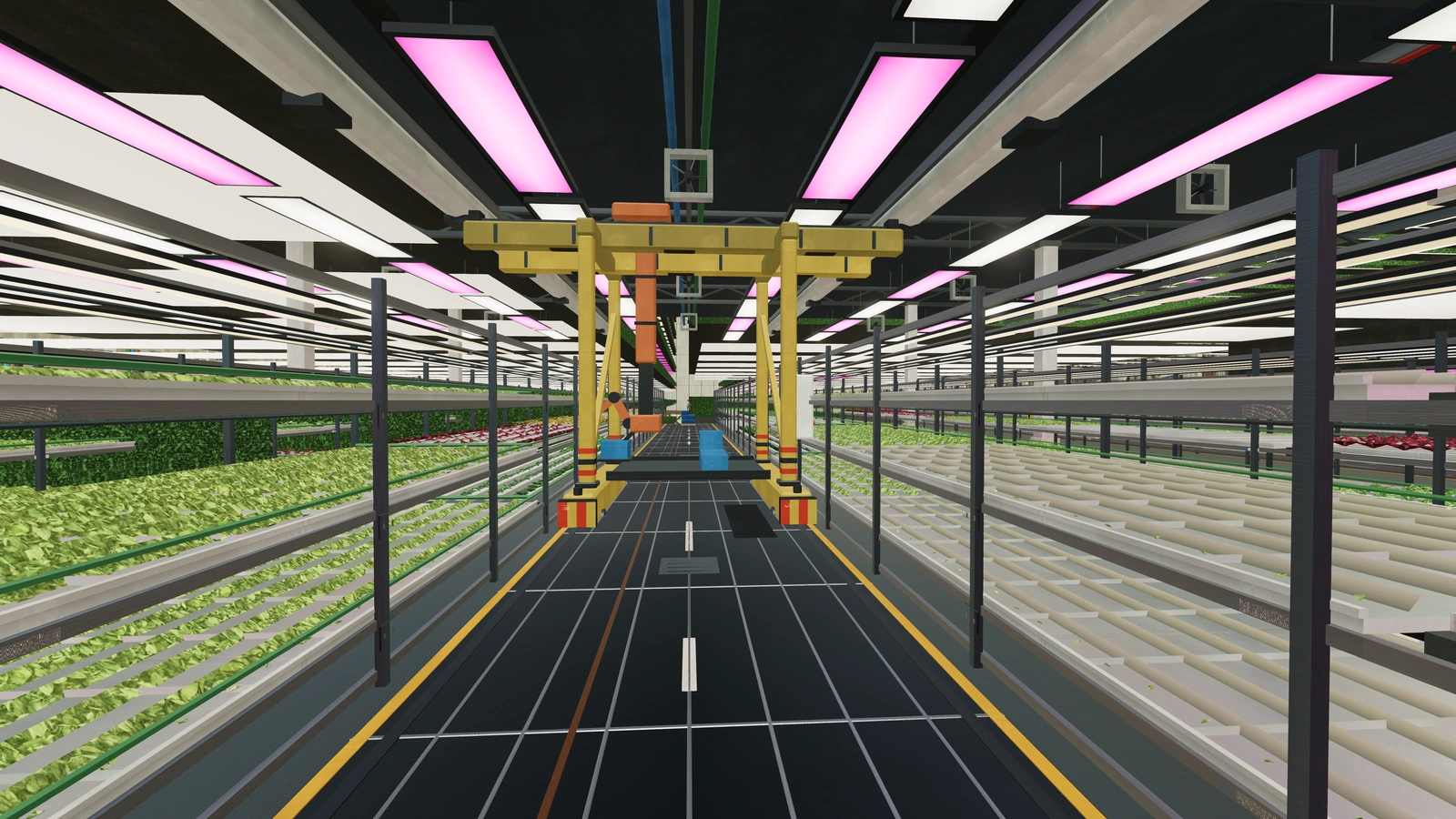
The farm of Tsiolkovsky (Rotor 1) sits on the 1,000 m ring level. The floor is 1,500 m from the axis, so gravity is 0.60 g. A link bridge connects it to the ascender, and the visitor gallery looks along a deck of the grow hall.
The hall is 288 m long, 124 m wide and 96 m tall: 24 bays of 12 m and 12 decks of 8 m. Racks of lettuce, basil and kale stand in four growth stages, from seedlings to heads ready to cut. LED rigs light them, nutrient channels feed them, and a harvest gantry runs overhead.
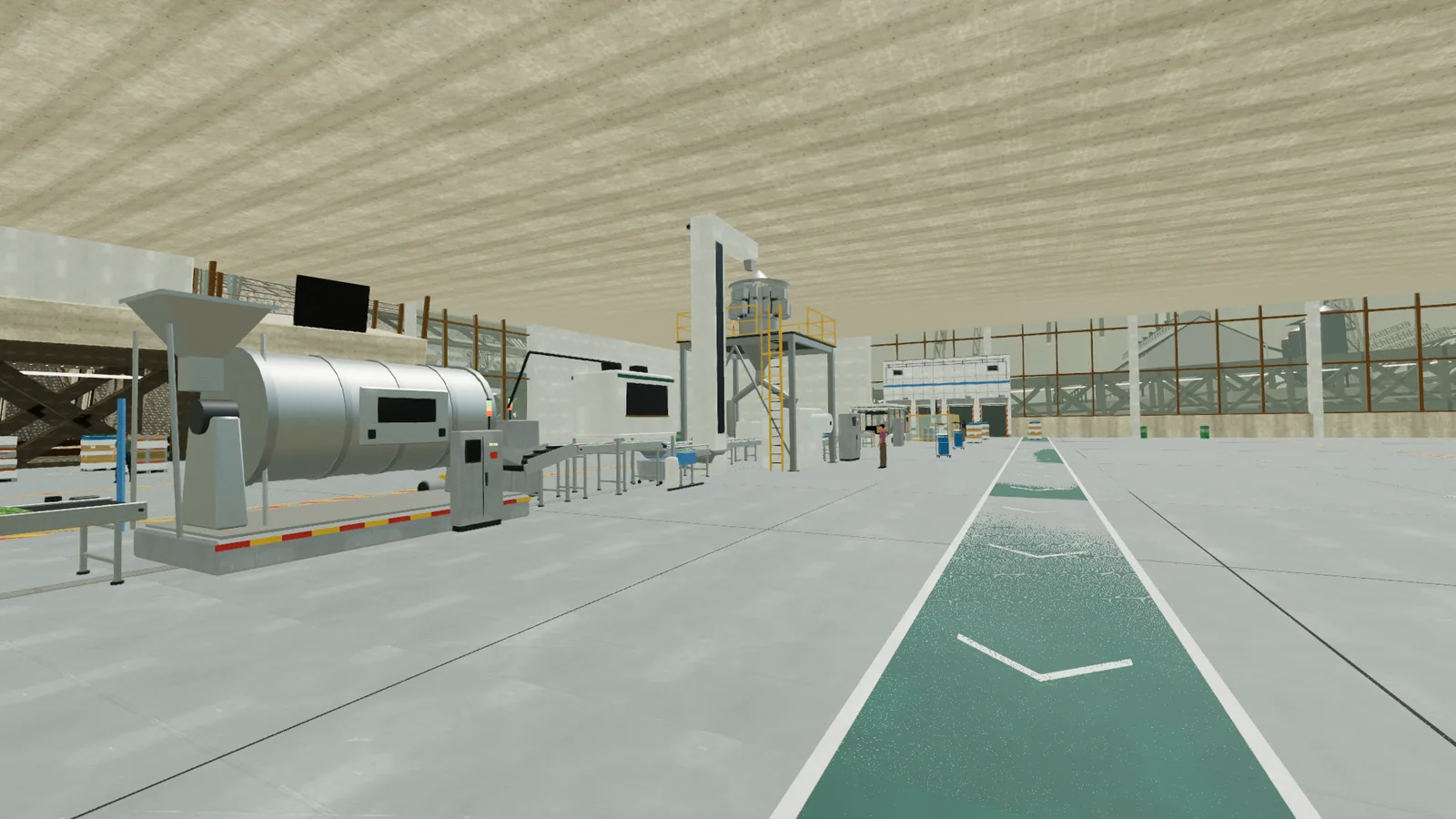
Next to the hall is the process wing. Totes arrive on a belt and pass the wash tunnel, the optical sorter and the weigher. The wing also holds packing, a bakery, bottling and a cold store. Four aeroponic towers, 15 m across and 72 m tall, grow roots in mist. A fermentation block makes protein and ingredients, and a tank farm stores the water and nutrients.
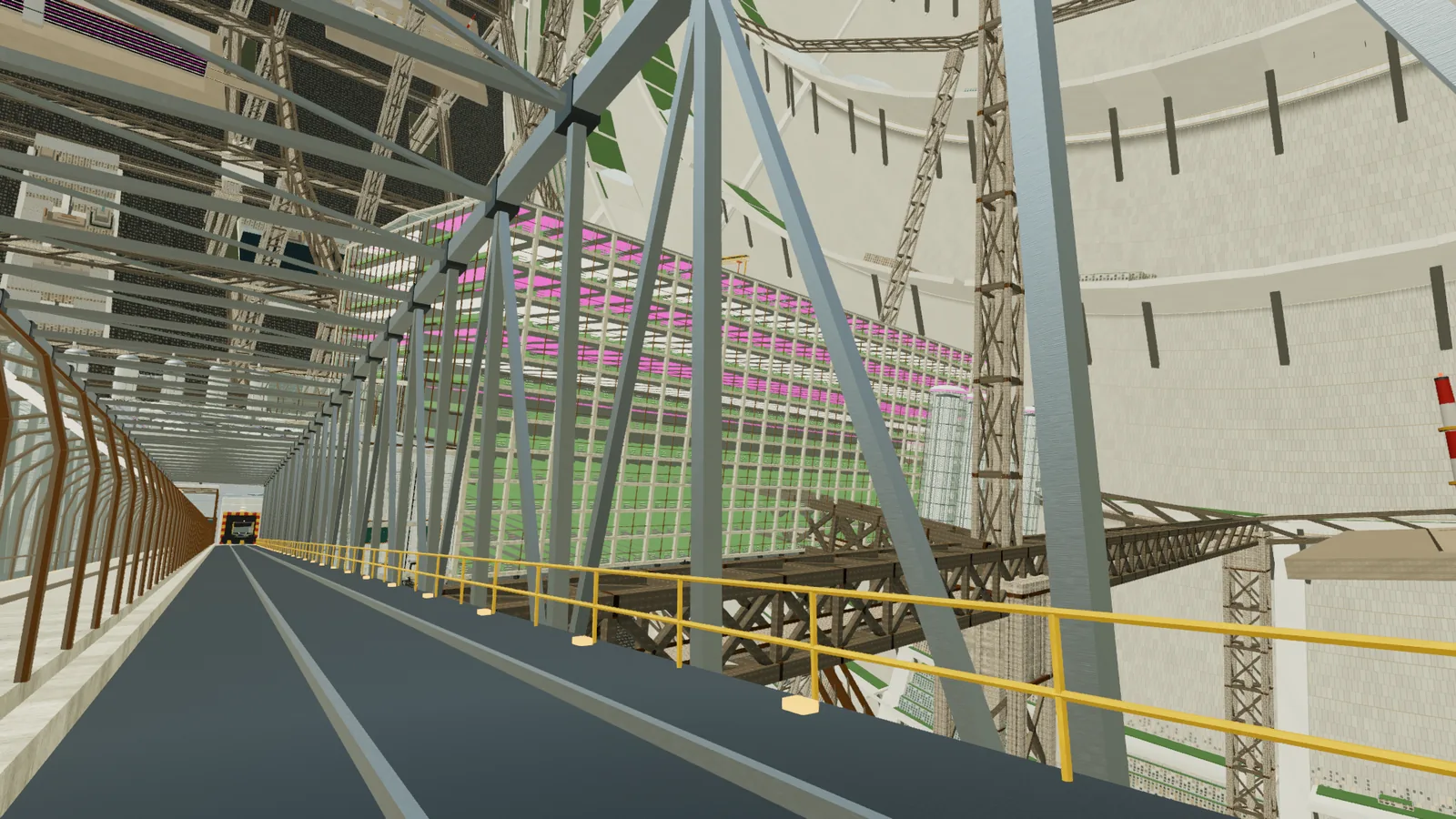
Ordinary food leaves on freight pods from the dock: crates of salad, trays of loaves, bottles and wrapped pallets. The fermenters are about 50 m tall and make roughly 2 t of product an hour. Fermentation supplies protein and other ingredients alongside the crops.
Why up here
Partial gravity is preferred to none for growing, and a food factory does not need to be near the streets. Putting farms at 0.4 to 0.6 g keeps the 1 g ground for parks, schools and homes. Above about 800 m the frame is an atmospheric service district, not housing: utilities, crop galleries and process halls.
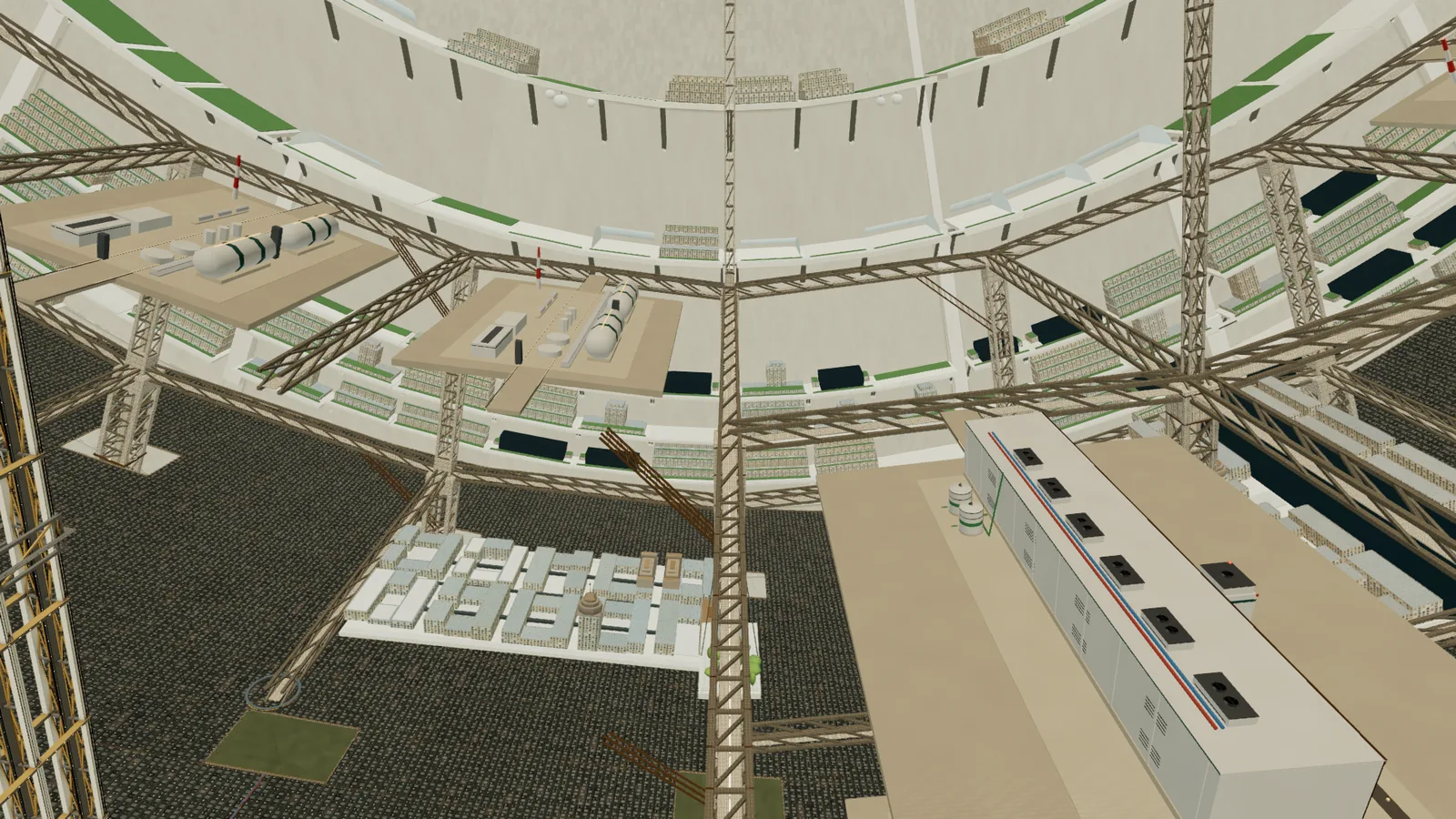
The air in the farm is the shared habitat air, so there are no airlocks and no separate farm vessel. Water and nutrients circulate in a recycling loop, with continuous recovery rather than a perfect seal. The science is in Air, water and food, and the gravity story is in Artificial gravity.
Water is the other loop. The farms recover it continuously, and what slips away is topped up from the asteroid ice held in Ehricke, the industrial rotor.
Key numbers
Go deeper: Facility levels and methods
Three levels of the frame carry service uses. At 625 m (0.75 g), one slot in four on the plate quarters is a utility plant for reclaimed water, nutrients and ventilation. At 1,000 m (0.60 g) are the crop galleries and process halls. At 1,500 m (0.40 g) are specialist process and crop research halls.
The farms use hydroponics, aeroponics, stacked crops, fungi, algae, precision fermentation and microbial protein. The grow hall's twelve decks give about 430,000 m² of growing area.
Every flow is tracked by element. There is no landfill: water, carbon, nitrogen, phosphorus, metals, glass and polymers are all recovered.
Visit
Open in the simulation: Upper City Agriculture Open in the simulation: Farm Grow Deck Open in the simulation: Farm Harvest Line Open in the simulation: Farm Packaging and Dispatch Open in the simulation: Service Facilities at 1,000 m Open in the simulation: Upper City Fringe
Nearby
Ascenders and the sky
The ascender is a lift 2.4 km tall. It carries 150 people from the street through the artificial sky to the axis in about ten minutes, and on the way your weight drops to almost...
The megaframe city
Above the streets, a lattice of piers and ring beams holds a second city on plates, bridges and terraces. The lattice is the megaframe.
The axis and the spine
At the centre of every rotor you weigh almost nothing, and a stationary tube 120 m wide runs the whole length of the station.